 What to eat on the street in Vietnam, and how

Understand · Diets
Vegetarian, vegan, halal and other diets on the street
How to eat vegetarian or vegan (an chay) from Vietnamese street stalls, where the hidden fish and shrimp are, what to ask for halal or gluten-free food, and the short phrases that make it work.
Chay: the word to look for
Vietnamese vegetarian food is called chay, and an chay means to eat vegetarian. A vegetarian version of a dish usually keeps the dish's name with chay added, with tofu replacing the meat: pho chay, com chay, banh beo chay. A sign reading com chay or quan chay marks a vegetarian eatery. Vegetarian food is often cheaper than the meat version, sometimes about half the price.
Chay food grew from Buddhist practice. Many lay Buddhists eat vegetarian on the first and fifteenth days of the lunar month and at Lunar New Year, and vegetarian eateries are busier on those days. Monastic-style vegetarian cooking also avoids pungent vegetables such as garlic and shallot, so a Buddhist chay kitchen can be a good place for people who avoid alliums, though not every chay stall follows that rule.
Sources: Wikipedia — Vietnamese cuisine; Wikipedia — Buddhist vegetarianism · last checked .
Where the animal products hide
The problem for vegetarians is rarely visible meat. It is the seasoning. Ask about these even when a dish looks vegetable-only:
- Fish sauce (nuoc mam). Made from fermented anchovies and other fish with salt, and used in most dipping sauces, marinades and many broths. It is not vegetarian.
- Shrimp paste (mam tom) and dried shrimp. In bun bo Hue broth, in northern dips, and as the floss on banh beo.
- Meat or bone stock. Noodle soups that are served without meat may still use a pork or beef broth.
- Lard and pork crackling. Fried shallots in lard, crackling on banh beo in Da Nang and Hoi An, lard on com tam.
- Egg and dairy, for vegans. Egg in fried rice, pancakes and mayonnaise; condensed milk in coffee and many sweet drinks.
The standard banh beo, for example, contains dried shrimp and fish sauce; some stalls make banh beo chay, but you must ask. Soy sauce is the usual vegetarian substitute for fish sauce, although the two taste very different.
Sources: Wikipedia — Fish sauce; vietnamtourism.com (independent guide) — banh beo and how to order it; MICHELIN Guide Vietnam — article on bun bo Hue; MICHELIN Guide Vietnam — what is com tam · last checked .
Phrases that work
| Write or say | Meaning |
|---|---|
| Toi an chay | I eat vegetarian |
| Khong thit | No meat |
| Khong ca, khong nuoc mam | No fish, no fish sauce |
| Khong tom, khong mam tom | No shrimp, no shrimp paste |
| Khong trung | No egg |
| Khong sua | No milk |
| Khong dau phong | No peanuts (southern word; lac in the north) |
| Toi bi di ung ... | I am allergic to ... |
Written words are more reliable than spoken ones, because Vietnamese is tonal and the spellings above leave out the accents. Write the phrases on a card or in your phone with the full Vietnamese spelling (a translation app will add the accents), and show it before you order. For an allergy, add a line saying the food makes you seriously ill.
Sources: vietnamtourism.com (independent guide) — banh beo and how to order it · last checked .
Vegetarian and vegan strategies by situation
- Dedicated chay eateries. The easiest option. Many serve a buffet or glass case of tofu, mock meat, vegetables and rice; point and pay by the plate. Ask about egg if you are vegan.
- Rice stalls. Choose stir-fried greens, tofu in tomato sauce and plain rice, and ask for no fish sauce on the vegetables.
- Banh mi carts. Some make an egg banh mi or a vegetable one; ask them to leave out the pate and to use soy sauce only if it is plain.
- Market food halls. More choice than a single stall, and sweet soups (che) of beans, jelly and coconut are often plant-based; ask about condensed milk.
- Lunar days. On the first and fifteenth of the lunar month more chay food is on sale, including at temples.
Strict vegans should expect to rely on chay eateries and to ask a lot of questions elsewhere. Cross-contact with fish sauce and shared pans is normal at ordinary stalls, and nobody can promise otherwise.
Sources: Wikipedia — Buddhist vegetarianism; Wikipedia — Vietnamese cuisine · last checked .
Halal food
Vietnam's Muslim community is small: the 2019 census counted 70,934 Muslims, many of them Cham, living mainly in the south-central coast, around Chau Doc in the Mekong Delta, and in Ho Chi Minh City. Mosques include the Al-Noor mosque in Hanoi and the Saigon Central Mosque in Ho Chi Minh City, built in 1935.
Halal street food is uncommon outside those communities. Pork, lard and pork stock are used widely, so a dish that looks like chicken or seafood may have been cooked in pork fat or served in a pork broth. Muslim travellers often eat seafood, vegetable and rice dishes and ask about the stock and the cooking fat; whether that meets your own standard is your decision. Halal-certified restaurants exist in the large cities, especially near mosques, but we do not list or vouch for named businesses.
Sources: Wikipedia — Islam in Vietnam (2019 census figures); Wikipedia — Saigon Central Mosque · last checked .
Gluten-free and other needs
Rice is the base of most street food, which helps: pho, bun, com tam and banh xeo batter are made from rice. The wheat comes in through banh mi bread, the fried dough sticks served with Hanoi pho, soy sauce, hoisin and some marinades. People with coeliac disease face the same cross-contact problem as allergy sufferers, because woks and oil are shared.
For low-sugar diets, note that southern cooking uses more sugar, and that dipping sauces, marinades and drinks are often sweet. For low-salt diets, broths and fish sauce are the main sources; ask for less sauce rather than none.
Sources: Wikipedia — Vietnamese cuisine; Wikipedia — Pho; Google Doodle archive — celebrating banh mi · last checked .
Common questions
Questions readers ask
Is it easy to be vegetarian in Vietnam?
It is easy at dedicated chay eateries and harder at ordinary stalls, where fish sauce and shrimp are used in dishes that look meat-free. Learning the word chay and carrying a written note solves most of it.
Is fish sauce in vegetarian food?
It should not be in food labelled chay, but at ordinary stalls fish sauce is the default seasoning. Ask for no fish sauce, and expect soy sauce instead.
Can I find halal food on the street?
Rarely, outside the Muslim communities in Ho Chi Minh City and the Mekong Delta. Pork and lard are common, so ask about the stock and the cooking fat.
Which street foods are gluten-free?
Rice-based dishes such as pho, bun and com tam are free of wheat in their base, but soy sauce, hoisin, fried dough and shared oil can add gluten. Banh mi is wheat bread.
Related
Read next
Understand · Dishes
Dish glossary
What the common street dishes are, where they come from and which allergens they usually contain.
Read more
Understand · Health
Food safety
Official health advice on street food, ice, raw herbs and methanol, applied to real stalls, and what to do if ill.
Read more
Understand · Ordering
How to eat at a stall
Choosing a stall, sitting down, ordering without a menu, using the herbs and sauces, and paying.
Read more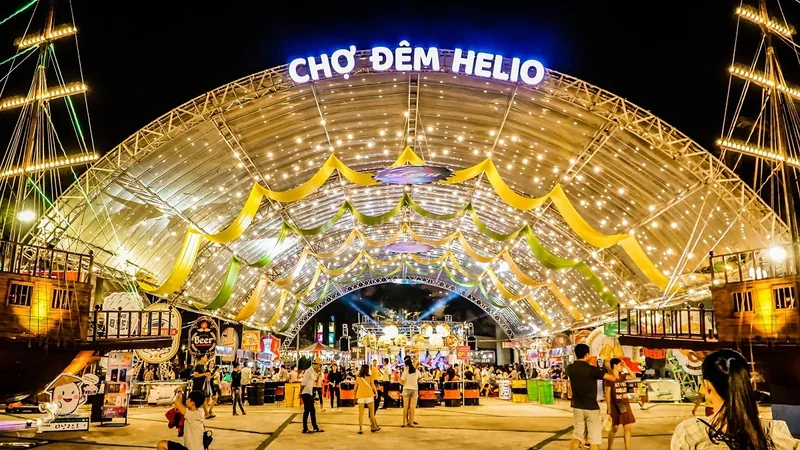
Understand · Markets
Markets and night markets
How market food halls and night markets work, when to go, and the main markets in Hanoi, Hue and Saigon.
Read more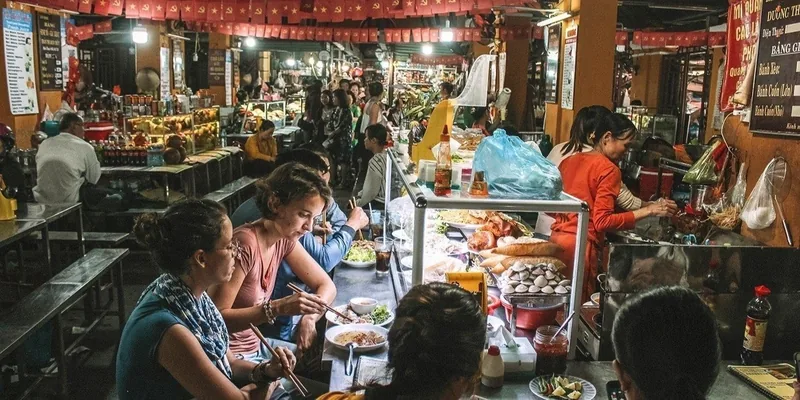
Understand · Etiquette
Etiquette and tipping
Shared tables, chopsticks, calling staff, rubbish, photos and tipping at Vietnamese street stalls.
Read more
Cities · South
Ho Chi Minh City
Com tam, banh mi and southern pho in Saigon: what and when to eat, sourced prices, seasons and who should skip it.
Read moreStart planning
Send a correction or a question
Tell us which page you mean, what you found at the stall or in the market, and when. A price, a date and a city help us check it.