 What to eat on the street in Vietnam, and how
Understand · Dishes
The dishes, what is in them and where they come from
A glossary of the street dishes visitors meet most often in Vietnam: what each one is, which region it belongs to, what usually goes into it, and the ingredients that matter if you have an allergy or avoid certain foods.
The glossary at a glance
The table lists the dish, the region it is most tied to, what it is, and what it usually contains that matters for allergies and diets. Usually is the key word: recipes vary by stall, and the only reliable way to know is to ask. The dietary page has the phrases to do that.
| Dish | Region | What it is | Usually contains (flags) |
|---|---|---|---|
| Pho bo / pho ga | Hanoi and the north; now everywhere | Flat rice noodles in a spiced beef or chicken broth | Fish sauce; beef or chicken; in Hanoi, fried dough sticks (wheat); in the south, hoisin (soy, often wheat) |
| Bun cha | Hanoi | Charcoal-grilled pork patties and pork belly in a sweet-sour dipping broth, with cold rice vermicelli and herbs | Pork; fish sauce; sugar; garlic and chilli; side spring rolls may contain shrimp or crab |
| Banh mi | Saigon origin claimed; now everywhere | Baguette-style roll with pate, cold cuts or meatballs, pickles and herbs | Wheat (gluten); pork liver pate; mayonnaise or margarine (egg, possibly dairy); soy sauce (soy, wheat); chilli |
| Banh xeo | Central and southern | Crisp rice-flour pancake coloured with turmeric, filled with shrimp, pork and bean sprouts | Shrimp (crustacean); pork; fish sauce dip; coconut milk in southern batter; fermented fish dip in the centre |
| Com tam | Ho Chi Minh City | Broken rice with grilled pork chop, shredded pork skin and a steamed egg-and-pork loaf | Pork; egg; fish sauce; sesame oil in some marinades; scallion oil and lard |
| Bun bo Hue | Hue | Spicy, lemongrass-scented beef broth with round noodles, beef and pork | Shrimp paste (crustacean); beef; pork; chilli; some bowls add pork blood cake or crab-pork patties |
| Cao lau | Hoi An | Thick, chewy noodles with sliced char siu pork, a few spoons of sauce, herbs and crisp noodle pieces | Pork; fish sauce and five-spice; crisp pieces roasted with peanuts; sesame on crackers; soy sauce at the table |
| Mi Quang | Quang Nam and Da Nang | Wide turmeric-yellow rice noodles with very little broth, meat or shrimp, herbs and a rice cracker | Shrimp (crustacean); peanuts; sesame cracker; quail eggs; fish sauce; pork or chicken |
| Banh beo | Hue | Small steamed rice cakes in saucers, topped with mung bean, dried shrimp floss and fried shallot | Dried shrimp (crustacean); fish sauce dip; pork crackling in Da Nang and Hoi An versions |
| Bun rieu | Hanoi and the north | Rice vermicelli in a tomato broth with crab paste | Crab (crustacean); often shrimp paste; fish sauce |
Shellfish, fish and peanuts are the three flags that come up most. Shrimp paste and fish sauce are often stirred into broths and dips where you cannot see them, and peanuts appear crushed over noodles and inside sauces. If your allergy is severe, read the dietary page before you eat anywhere.
Sources: Wikipedia — Pho; VietNamNet — bun cha, the characteristic dish of Hanoi; Google Doodle archive — celebrating banh mi; Hanoi Times — banh xeo, the pancake named after a sound; vietnamtourism.com (independent guide) — how to eat banh xeo; Vietnam News Agency — com tam, a signature dish of Sai Gon; MICHELIN Guide Vietnam — what is com tam; MICHELIN Guide Vietnam — article on bun bo Hue; Da Nang Tourism Promotion Center — cao lau; vietnamtourism.com (independent guide) — mi Quang guide; Da Nang Tourism Promotion Center — Quang noodles; vietnamtourism.com (independent guide) — banh beo and how to order it; Tuoi Tre News — Hanoi eatery suspended over Tet crab noodle prices (February 2025) · last checked .
Pho
Pho is a soup of flat rice noodles in a broth simmered from bones with star anise, cinnamon, cardamom, coriander seed, cloves and charred ginger and onion, finished with fish sauce. Beef pho (pho bo) is the usual version; chicken pho (pho ga) uses the same spices, often without the ginger. The origin is debated: theories point to French beef stew, to a Chinese beef noodle dish sold in Hanoi, and to a Vietnamese buffalo dish.
What is agreed is that pho grew up in Hanoi and Nam Dinh in the early twentieth century, sold by vendors who carried pots of broth through the streets. The Hanoi government portal dates street sales across the city to 1907 to 1910. Hanoi-style pho was listed as national intangible cultural heritage on 9 August 2024 and the recognition was announced at a city food festival on 29 November 2024. Nam Dinh, the other home of pho, became part of Ninh Binh province in the 2025 reorganisation.
The northern bowl has a clear, savoury broth, little on the side, and is eaten with pickled garlic, chilli sauce and sticks of fried dough. After 1954, when over a million people moved south, pho changed in Saigon: the broth became sweeter and cloudier, and lime, bean sprouts, Thai basil, culantro and hoisin became standard. Neither is the correct one. They are two dishes with one name.
Sources: Wikipedia — Pho; Hanoi government portal — Hanoi-style pho recognised as national intangible heritage; Vietnam Investment Review (VNA) — pho of Hanoi and Nam Dinh recognised; Hanoi Department of Tourism — food and drink articles; Wikipedia — Provinces of Vietnam (2025 reorganisation) · last checked .
Bun cha
Hanoi's lunch. Thin slices of pork belly and small minced pork patties are marinated in fish sauce, caramel and garlic, grilled over charcoal, and served in a bowl of dipping broth made from fish sauce, sugar, water and vinegar. Cold rice vermicelli and a basket of lettuce, mint, coriander, perilla and basil come alongside, with pickled carrot and green papaya in the broth. The smoke from the grills is how you find a stall.
It is eaten by dipping, not pouring: lift a little noodle, dip it, add a piece of pork and some herbs, eat, repeat. The how-to page walks through it. Stalls typically open around 10:30 am and many sell out or close by about 2 pm.
Sources: VietNamNet — bun cha, the characteristic dish of Hanoi; vietnamtourism.com (independent guide) — bun cha and how to eat it · last checked .
Banh mi
A light, crisp roll inspired by the French baguette, split and filled with some combination of pork pate, Vietnamese cold cuts such as gio lua, meatballs, pickled radish and carrot, coriander, mayonnaise or margarine, soy sauce and chilli. Some accounts place its beginnings at Saigon street stalls in the late 1950s, though no origin story has been verified. The word entered the Oxford English Dictionary on 24 March 2011, and Merriam-Webster added it for its 2022 edition.
For allergies and diets, banh mi is the one common street food that is built on wheat. The fillings also bring egg (mayonnaise), soy (soy sauce) and pork liver (pate). Egg-only and vegetarian versions exist at some carts; ask, and ask again about the pate and the sauce.
Sources: Google Doodle archive — celebrating banh mi; Vietnam National Authority of Tourism — banh mi added to Merriam-Webster · last checked .
Banh xeo
A pancake of rice-flour batter coloured with turmeric, fried with shrimp, pork and onion, and folded over bean sprouts. The name comes from the sizzle the batter makes when it hits the pan. It is eaten by hand, torn into pieces, wrapped with herbs, and dipped.
The size and the wrapper change by region. In the south the pancake is large and thin, the batter often includes coconut milk, it is wrapped in lettuce with mint and perilla, and dipped in sweet-sour fish sauce. In the centre it is small and hand-sized, rolled in dry rice paper and dipped in a thick fermented fish sauce. Hue has a related dish, banh khoai, smaller still, served with green banana, star fruit and a thick sauce.
Sources: Hanoi Times — banh xeo, the pancake named after a sound; vietnamtourism.com (independent guide) — how to eat banh xeo · last checked .
Com tam
Broken rice: the fractured grains left after milling, once sold cheaply and eaten by farmers, workers and students, now the signature plate of Ho Chi Minh City. A standard plate has a grilled pork chop (suon) marinated with fish sauce, garlic, sugar and sometimes honey and sesame oil; shredded pork skin (bi); and a steamed loaf of egg, minced pork, glass noodles and wood-ear mushroom (cha trung). Scallion oil, pickled carrot and daikon, cucumber and a bowl of fish sauce with chilli finish it.
One widely told story puts its start in the 1930s with a vendor who used broken rice to bring the price of a plate down. Whatever the truth, the dish is still eaten at every hour in the south, and plates are often built to order: point at what you want added.
Sources: Vietnam News Agency — com tam, a signature dish of Sai Gon; MICHELIN Guide Vietnam — what is com tam · last checked .
Bun bo Hue
The spicy beef noodle soup of Hue. The broth is simmered for hours from beef bones and flavoured with lemongrass, shrimp paste and chilli, so it is hotter, sourer and more pungent than pho. The noodles are round and thicker. Toppings vary by stall: beef shank and tendon, pork knuckle, beef balls and Hue-style pork patties are common. Fresh herbs and lime come on the side.
In Hue it is mainly a breakfast bowl, eaten from about 6 to 9 am, and good vendors often sell out by mid-morning. Elsewhere in Vietnam it is sold all day. Because of the shrimp paste, it is not suitable for people with shellfish allergies even when the toppings look like plain meat.
Sources: MICHELIN Guide Vietnam — article on bun bo Hue; vietnamtourism.com (independent guide) — Hue food scene · last checked .
Cao lau
Hoi An's own noodle. According to the Da Nang tourism authority, the rice is soaked in lye water made from the ash of trees from the Cham Islands, which turns it pale yellow, and the dough is kneaded with water from the old Ba Le well, steamed and cut into thick strands. The result is chewy, closer to udon than to rice vermicelli.
A bowl has slices of char siu pork marinated in fish sauce and five-spice, two or three spoonfuls of sauce rather than a broth, crisp fried noodle pieces roasted with peanuts, herbs, and grilled rice crackers on the side. The dish is said to date from the seventeenth century, when Chinese and Japanese merchants settled at the port. The tourism authority says it is found only in Hoi An; what is sold elsewhere is an imitation.
Sources: Da Nang Tourism Promotion Center — cao lau · last checked .
Mi Quang
The everyday noodle of Quang Nam and Da Nang. Wide rice noodles, coloured yellow with turmeric, sit in a small amount of broth, just enough to moisten them; asking for more marks you as a visitor. Toppings are pork, chicken, shrimp or fish, with banana blossom, basil, Vietnamese coriander, perilla, bean sprouts and lettuce. Crushed roasted peanuts, a toasted sesame rice cracker, sometimes quail eggs, lime and chilli finish it.
Crumble the cracker over the bowl, squeeze the lime, mix with chopsticks and eat the herbs rather than leaving them. For allergies, mi Quang carries more flags than most: shrimp, peanut, sesame and egg are all common.
Sources: vietnamtourism.com (independent guide) — mi Quang guide; Da Nang Tourism Promotion Center — Quang noodles · last checked .
Other dishes you will meet
- Banh beo — Hue's steamed rice cakes, six to ten small saucers per serving, topped with mung bean, dried shrimp floss and fried shallots. Sold in the morning. Ordered with banh nam (flat, banana-leaf-wrapped rice cake with shrimp and pork) and banh bot loc (chewy tapioca dumplings with shrimp and pork).
- Com hen — Hue's rice with baby clams. A shellfish dish.
- Bun rieu — northern rice vermicelli in a tomato and crab broth.
- Bun oc — Hanoi snail noodle soup.
- Che — sweet soups and puddings of beans, jelly, fruit and coconut milk, sold in every city.
Sources: vietnamtourism.com (independent guide) — banh beo and how to order it; vietnamtourism.com (independent guide) — Hue food scene; VietNamNet — Hanoi pho and rice platter prices (July 2026) · last checked .
Common questions
Questions readers ask
Which dishes are safest for someone with a shellfish allergy?
None can be called safe without asking, because shrimp paste and dried shrimp are added to broths and toppings. Dishes built on grilled pork or chicken, such as com tam, bun cha or chicken pho, are more often free of shellfish, but side rolls, dips and broths still need checking.
Is pho a breakfast dish?
It is commonly eaten in the morning, and early street vendors sold it at dawn and dusk. Today it is sold all day in the big cities, though many small stalls close once the broth runs out.
Why can I only find real cao lau in Hoi An?
The Da Nang tourism authority links the noodle to the lye water and the water of the Ba Le well used in Hoi An. Versions sold elsewhere use different noodles.
Does banh mi contain gluten?
Yes. The roll is wheat bread, and the soy sauce usually contains wheat too. It is the main street food to avoid on a gluten-free diet.
Related
Read next

Understand · Ordering
How to eat at a stall
Choosing a stall, sitting down, ordering without a menu, using the herbs and sauces, and paying.
Read more
Understand · Diets
Vegetarian and dietary needs
An chay, vegan, halal and gluten-free street eating: hidden ingredients, the words to use and where to look.
Read more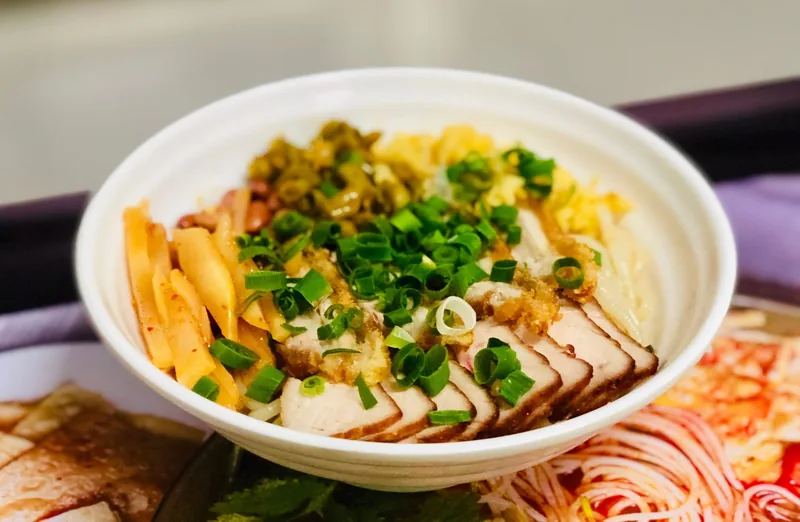
Understand · Prices
Prices by city
Price ranges for street dishes in five cities, with sources and dates, plus how to avoid being overcharged.
Read more
Cities · North
Hanoi
What and when to eat in Hanoi, sourced prices, seasons, getting there, and who should skip it.
Read more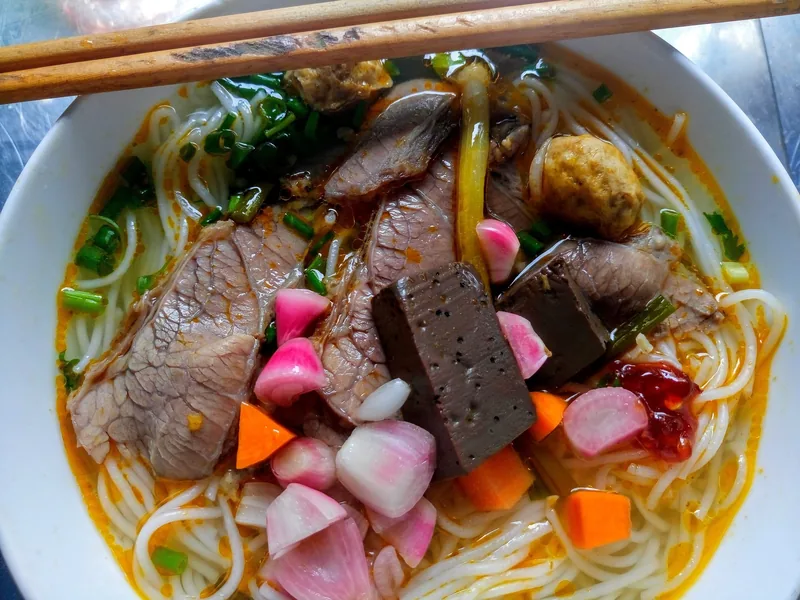
Cities · Centre
Hue
Bun bo Hue, steamed cakes and clam rice in Hue: when to eat, sourced prices, seasons and who should skip it.
Read more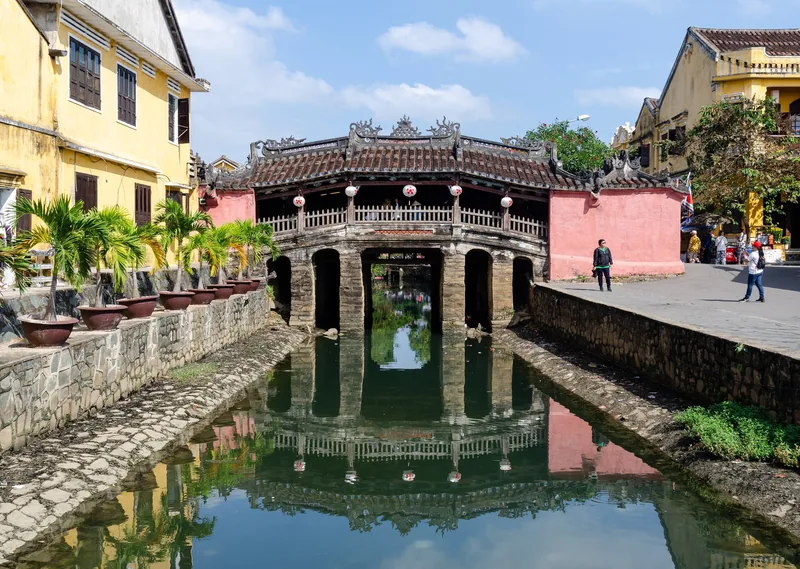
Cities · Centre
Hoi An and Da Nang
Cao lau, mi Quang and banh xeo in Hoi An and Da Nang: when to eat, sourced prices, seasons and who should skip it.
Read more
Start planning
Send a correction or a question
Tell us which page you mean, what you found at the stall or in the market, and when. A price, a date and a city help us check it.