 What to eat on the street in Vietnam, and how

Understand · Ordering
How to order and eat at a street stall
A walk-through of a typical street stall in Vietnam, from choosing one to paying, with the techniques for the dishes that are not obvious: dipping bun cha, wrapping banh xeo, mixing mi Quang. No menu needed.
How a stall is set up
A typical street stall is a cooking station, a few low tables and a stack of plastic stools on the pavement, or the ground floor of a house opened onto the street. Many sell a single dish, named on the sign or the side of the cart. Others, especially rice stalls, show a glass case of dishes to point at. A stall in a market food hall works the same way, only under a roof.
The stools are low, around shin height. If your knees protest, ask for a higher stool or a table further inside; most places have one or two. Tables are shared: sitting next to strangers is normal and nobody expects conversation.
Opening hours follow the food, not the clock. A broth stall can close at 10 am because the pot is empty; a bun cha stall typically opens around 10:30 am and is done by about 2 pm; grilled snacks and pancakes appear after dark. In Hue, bun bo Hue is a morning dish and banh khoai an evening one. If a stall is closed, come back at the other end of the day.
Sources: vietnamtourism.com (independent guide) — bun cha and how to eat it; vietnamtourism.com (independent guide) — Hue food scene · last checked .
Choosing where to sit down
There is no reliable outside sign of a clean kitchen, but a few things help. A stall with a steady stream of local customers turns its food over quickly, so the broth and the meat have not been sitting. A pot that is visibly simmering is a good sign for soups. Food cooked in front of you and served hot is the lower-risk choice in all the official health advice we cite.
A stall with a printed menu in English and prices in dollars is not necessarily worse, but it is aimed at visitors and usually costs more. A sign with prices in dong, whether on a board or on the cart, makes the bill easier to check. The food safety page and the prices page go into both questions.
Sources: US CDC Yellow Book — food and water precautions for travelers · last checked .
Ordering, step by step
- 01
Sit down first
At most stalls you take a seat and someone comes to you. At a few busy counters you order and pay first; watch what the person in front does.
- 02
Say how many
Hold up fingers for the number of portions. If there are options, point at the sign, the glass case or the next table.
- 03
Ask the price
Say "bao nhieu tien?" (how much?) or show the question on your phone. Asking before you eat avoids nearly all disputes.
- 04
Say what to leave out
Use a short phrase such as "khong hanh" (no spring onion) or "khong tom" (no shrimp). The dietary page has more.
- 05
Eat, then pay
At most stalls you pay at the end, at the table or at the cooking station. Say "tinh tien" (the bill, please).
Most stalls have no written menu. Pointing at what others are eating works everywhere, and stall owners are used to it. Writing the dish name on your phone, with the accents if you can, avoids confusion between similar names.
Sources: vietnamtourism.com (independent guide) — banh beo and how to order it · last checked .
The things already on the table
The table usually holds everything you need, and it is all free unless it comes sealed in a packet. Expect some of: a tube of chopsticks and a box of spoons; paper napkins; a basket or plate of raw herbs and lettuce; wedges of lime; fresh chilli, chilli sauce or chilli in vinegar; fish sauce; and, at pho stalls in Hanoi, a jar of pickled garlic.
Taste before you add anything. Many dishes are seasoned in the kitchen and the condiments are for adjusting, not building the flavour. The usual pattern is a squeeze of lime, a little chilli, and herbs torn into the bowl.
Packaged wet towels, bottled water, or a plate of snacks placed on the table without being ordered are the items most likely to appear on the bill. If you do not want them, push them aside or say no when they arrive; if you are not sure, ask.
Sources: Wikipedia — Vietnamese cuisine; Wikipedia — Pho · last checked .
Techniques for the dishes that need one
Bun cha
Lift a small bundle of cold noodles with chopsticks and dip it into your bowl of broth; do not pour the broth over the noodles. Add a piece of pork and a few herbs to the same mouthful. Repeat. Taste the broth before adding chilli. If the broth bowl is shared, use the back ends of your chopsticks to move herbs into it.
Banh xeo
Southern style: tear off a piece of pancake, lay it on a large lettuce leaf, add mint and perilla, roll it up and dip it. Central style: place herbs and a piece of pancake on a sheet of dry rice paper, roll it tightly and dip and eat straight away, before the paper softens.
Mi Quang and cao lau
These are dry noodles with a little liquid. Crumble the cracker over the bowl, add lime and chilli, and mix everything together from the bottom before you start. The sauce is meant to coat the noodles, not to be drunk.
Banh beo
Loosen each small cake from its saucer with the spoon, spoon sauce over it and eat it in one or two bites, soon after it arrives; it turns rubbery as it cools.
Sources: vietnamtourism.com (independent guide) — bun cha and how to eat it; vietnamtourism.com (independent guide) — how to eat banh xeo; vietnamtourism.com (independent guide) — mi Quang guide; vietnamtourism.com (independent guide) — banh beo and how to order it · last checked .
Paying
Cash in Vietnamese dong is the default. Bring small notes: VND 10,000, 20,000 and 50,000 cover most street meals, and a VND 500,000 note for a VND 40,000 bowl can cause a long hunt for change. The VND 20,000 and VND 500,000 notes are both blue-toned, so look twice before handing one over.
Many stalls now also take bank transfers by QR code. That is convenient, but check the amount on your screen before you confirm. In a case reported by Tuoi Tre in February 2025, diners at a Hanoi crab noodle shop paid VND 1.2 million for three bowls by bank transfer, ten times the usual VND 40,000 a bowl; the ward suspended the shop while it investigated. As a rough guide to scale, Tuoi Tre converted VND 430,000 as US$16.3 in June 2026.
Sources: Tuoi Tre News — Hanoi eatery suspended over Tet crab noodle prices (February 2025); Tuoi Tre News — Hanoi vendor fined after charging a tourist for fried cakes (June 2026) · last checked .
Common questions
Questions readers ask
Do I need to speak Vietnamese to order?
No. Pointing, holding up fingers and showing a written dish name are understood at almost every stall. Learning how to ask the price helps more than any other phrase.
Are the herbs and the tea on the table free?
The herbs, lime, chilli and sauces are part of the meal. Iced tea is often included or very cheap, while sealed wet towels, bottled drinks and snacks are usually charged. Ask if you are not sure.
Is it rude to sit at a table with strangers?
No. Shared tables are normal at street stalls. Take a free stool, nod, and get on with your meal.
Should I pay before or after eating?
At most stalls you pay after eating. At a few busy counters you order and pay first, so watch what the customers ahead of you do.
Related
Read next
Understand · Dishes
Dish glossary
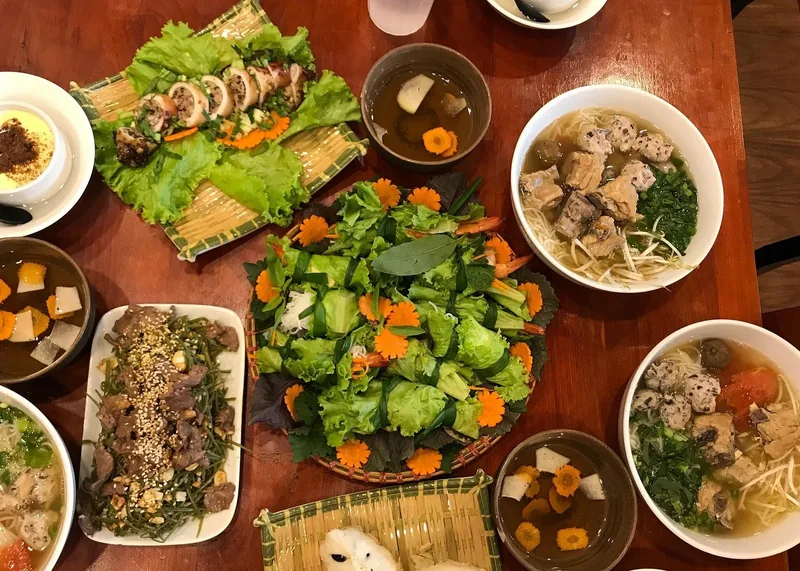
What the common street dishes are, where they come from and which allergens they usually contain.
Read more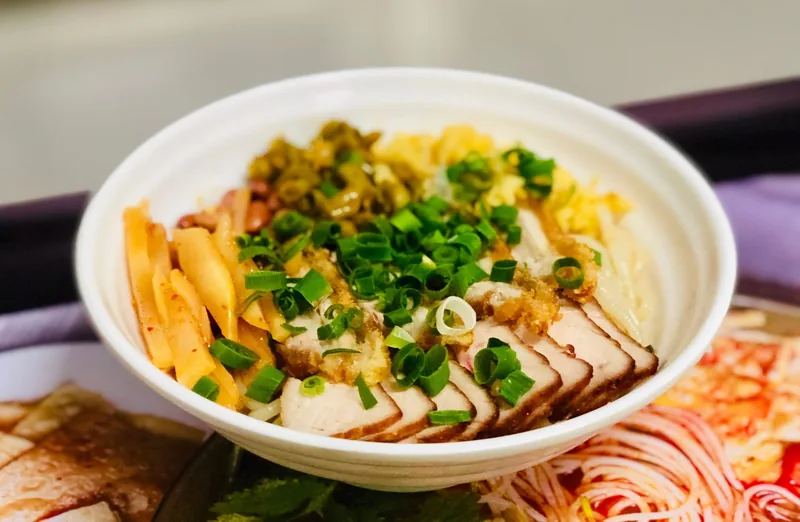
Understand · Prices
Prices by city
Price ranges for street dishes in five cities, with sources and dates, plus how to avoid being overcharged.
Read more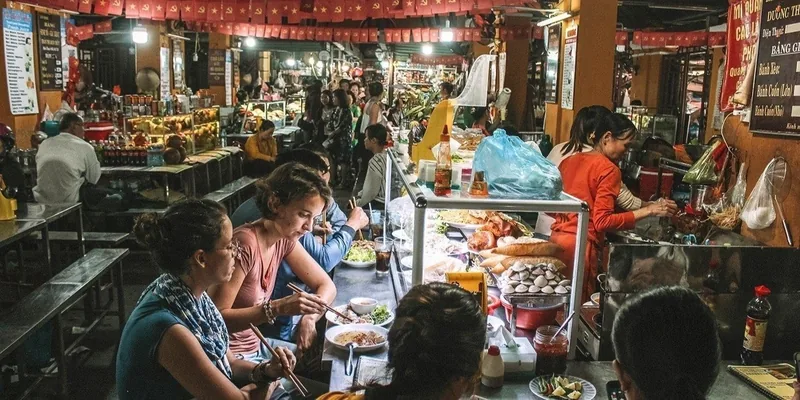
Understand · Etiquette
Etiquette and tipping
Shared tables, chopsticks, calling staff, rubbish, photos and tipping at Vietnamese street stalls.
Read more
Understand · Health
Food safety
Official health advice on street food, ice, raw herbs and methanol, applied to real stalls, and what to do if ill.
Read more
Understand · Markets
Markets and night markets
How market food halls and night markets work, when to go, and the main markets in Hanoi, Hue and Saigon.
Read more
Understand · Diets
Vegetarian and dietary needs
An chay, vegan, halal and gluten-free street eating: hidden ingredients, the words to use and where to look.
Read moreStart planning
Send a correction or a question
Tell us which page you mean, what you found at the stall or in the market, and when. A price, a date and a city help us check it.