 What to eat on the street in Vietnam, and how
Cities · Centre
Hoi An and Da Nang: cao lau, mi Quang and the old town
Hoi An has a noodle dish tied to the town itself, a banh mi culture out of proportion to its size, and an old town visited by large numbers of people. Da Nang, of which Hoi An is now a ward, is the home of mi Quang. What to eat, when, what it costs and when to stay away.
At a glance
- Signature dishes
- Cao lau, mi Quang
- Nights
- 2 + 1 for Da Nang
- Cao lau
- VND 35,000 – 45,000
- Drier months
- Feb – Aug
- Flood risk
- Sep – Nov
- Airport
- Da Nang (DAD)
Sources: vietnamtourism.com (independent guide, not a government site) — Hoi An daily budget 2026; Vietnam National Authority of Tourism — weather and climate · last checked .
What eating in Hoi An is like
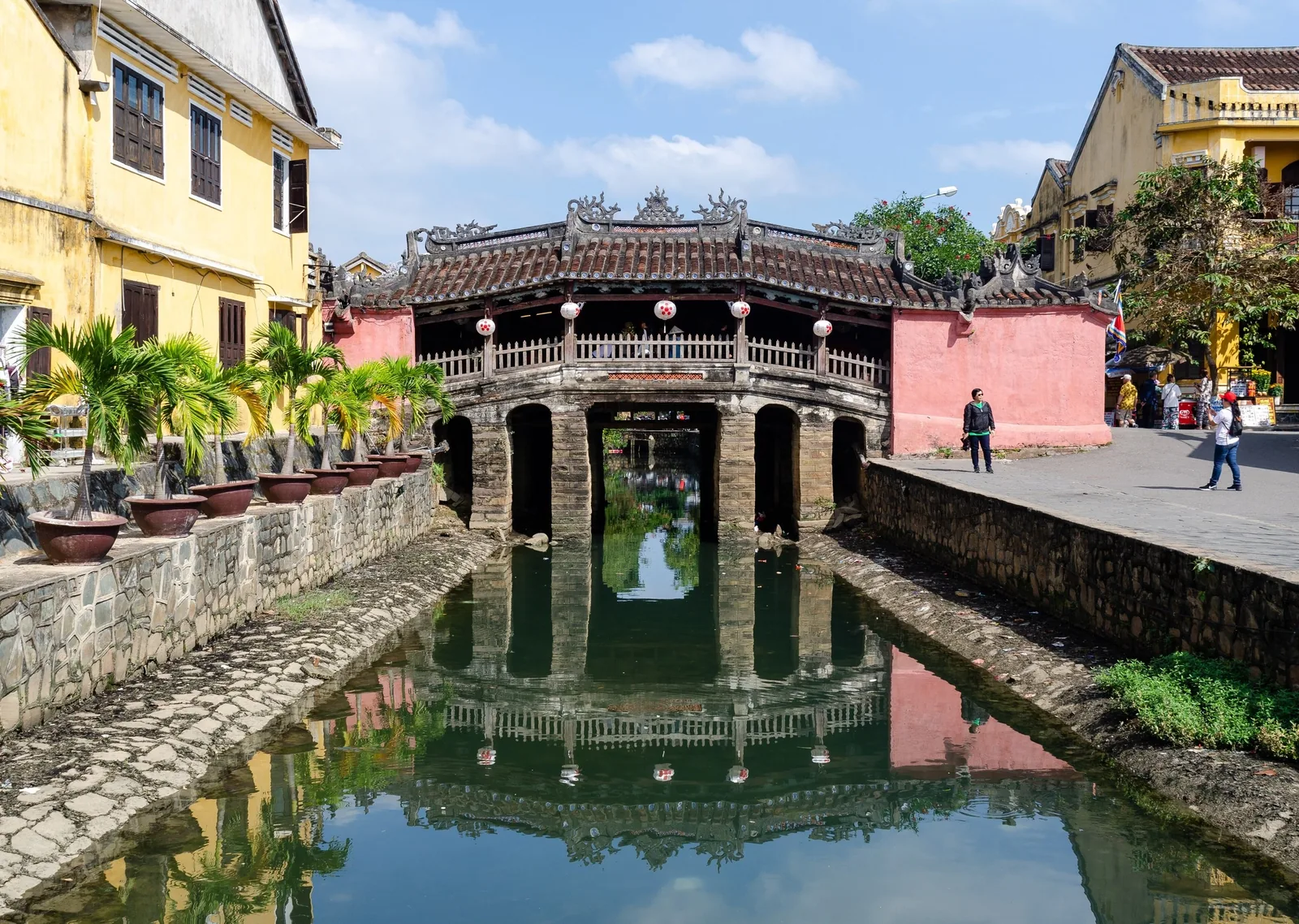
Hoi An's old town, a UNESCO World Heritage Site since December 1999, was a trading port where Chinese and Japanese merchants settled in the seventeenth century. Its food carries that history. Cao lau, the town's own noodle, is said to date from the seventeenth century, and according to the Da Nang tourism authority it is made with lye water from the ash of Cham Islands trees and water from the old Ba Le well.
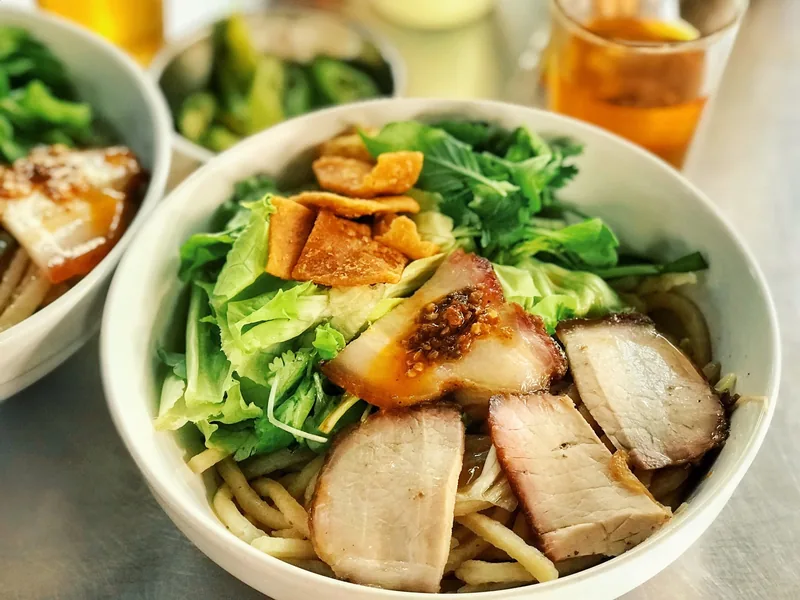
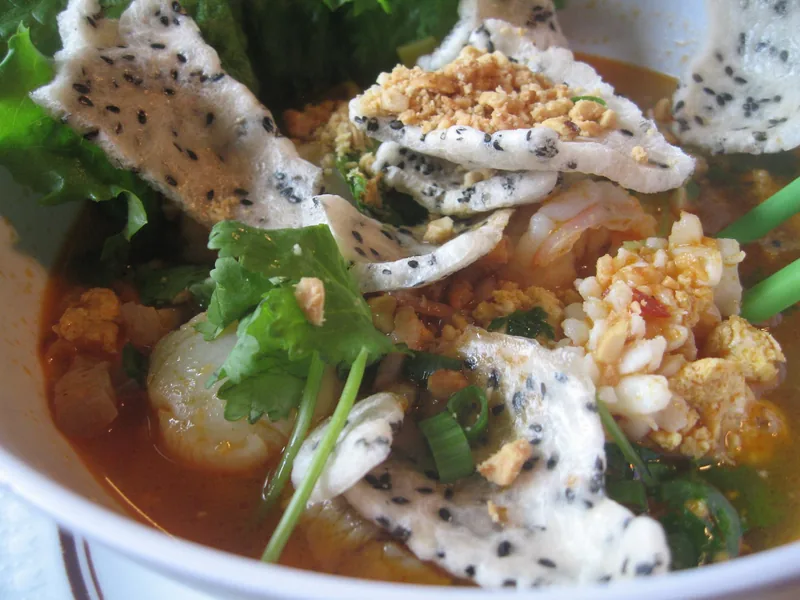
A bowl of cao lau has thick, chewy noodles, char siu pork marinated in fish sauce and five-spice, a few spoonfuls of sauce rather than a broth, crisp fried noodle pieces, herbs and rice crackers. Mi Quang, the noodle of the surrounding Quang Nam area and Da Nang, has wide turmeric-yellow noodles in very little broth, with shrimp, pork or chicken, peanuts and a sesame rice cracker. Banh mi, banh xeo and chicken rice complete the usual list.
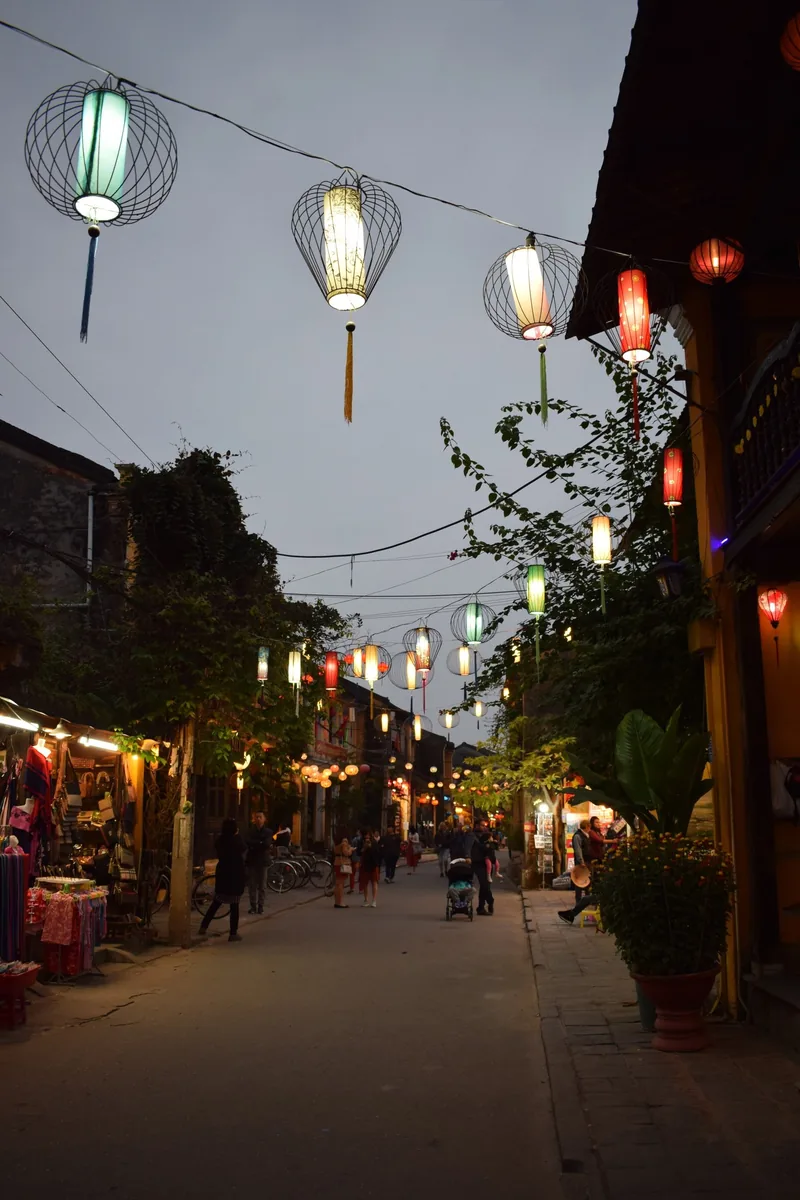
Two practical points. The old town is crowded, especially in the evening, and stalls along its main streets are priced for visitors; the back alleys off Tran Phu Street and the morning markets are where local prices hold. And since the 2025 reorganisation, Quang Nam province has been part of Da Nang city, so Hoi An's old town is now a ward of Da Nang.
Sources: Wikipedia — Hoi An Ancient Town; Da Nang Tourism Promotion Center — cao lau; Da Nang Tourism Promotion Center — Quang noodles; vietnamtourism.com (independent guide) — mi Quang guide; vietnamtourism.com (independent guide, not a government site) — Hoi An daily budget 2026; Wikipedia — Provinces of Vietnam (2025 reorganisation); Wikipedia — Hoi An (2025 ward status) · last checked .
What to eat, and when
| Dish | When | Typical price (VND) |
|---|---|---|
| Mi Quang | Mornings and early lunch; many specialty shops close after about 1 pm | 30,000 – 40,000 at morning markets |
| Cao lau | Lunch and evening | 35,000 – 45,000 off Tran Phu Street |
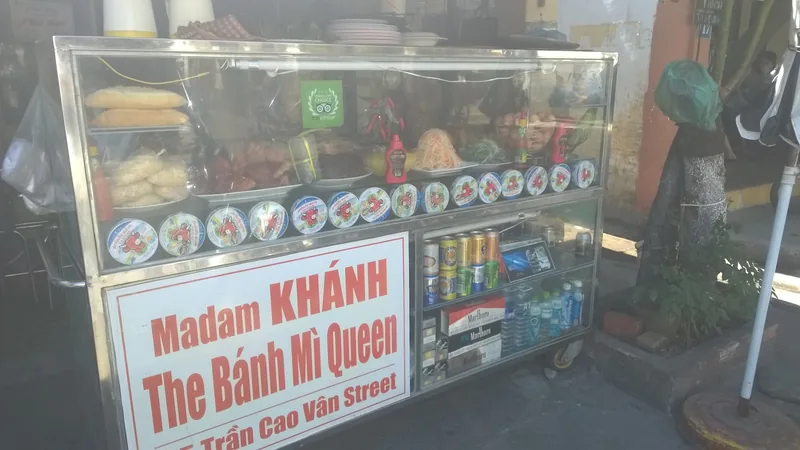
| Banh mi | Any time | 20,000 – 35,000 |
| Com ga (chicken rice) | Lunch and evening | 40,000 – 50,000 |
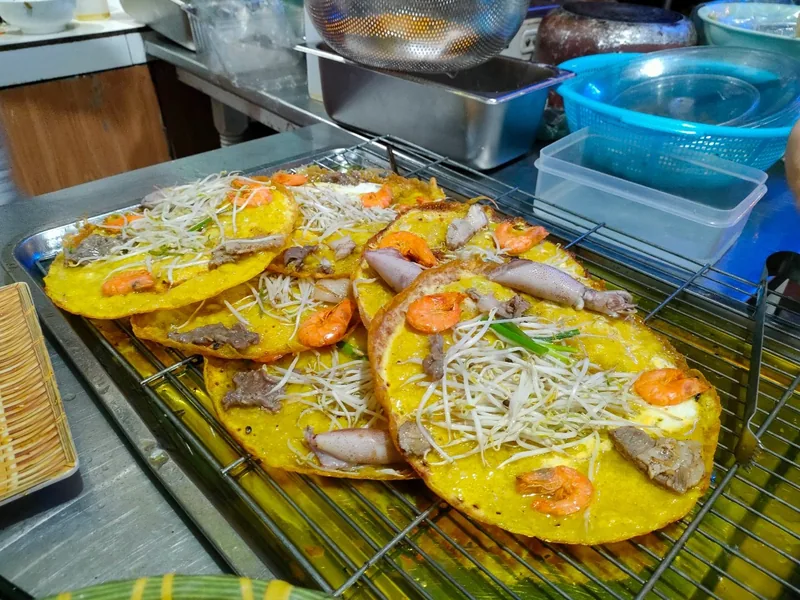
| Banh xeo | Afternoon and evening | 25,000 – 35,000 a portion in Hoi An |
| Banh beo | Morning | 30,000 – 60,000 a serving in Hoi An or Da Nang |
Mi Quang has very little broth on purpose; crumble the cracker into the bowl and mix. The how-to page explains the technique for mi Quang, cao lau and banh xeo, and the dish glossary lists their allergens: mi Quang carries shrimp, peanut, sesame and egg flags.
Sources: vietnamtourism.com (independent guide) — mi Quang guide; vietnamtourism.com (independent guide, not a government site) — Hoi An daily budget 2026; vietnamtourism.com (independent guide) — banh beo and how to order it · last checked .
How many nights
Two nights in Hoi An is a reasonable planning estimate for its food: one morning for mi Quang at a market, a lunch and a dinner for cao lau and chicken rice, banh mi in between, and an evening for banh xeo. Add a night in Da Nang if you want mi Quang and banh xeo away from the old town crowds; Da Nang's banh xeo is often deep-fried for extra crispness.
Hoi An and Da Nang are close enough to combine by road, and many visitors base themselves in one and visit the other for a day. Plan your mornings in whichever place you want to eat mi Quang.
Sources: vietnamtourism.com (independent guide) — how to eat banh xeo · last checked .
When to go
The national tourism authority describes Hoi An as warm to hot and sunny from February to August, hottest from May to August, and rainy, cool and cloudy from September to January, coldest in January, with a few small floods from September to November. Flooding affects the riverside streets of the old town first.
3 = dry and pleasant, 2 = workable or hot, 1 = wettest or flood-prone. Our summary of the official notes.
Evenings are the most crowded time in the old town in every season. Eating mi Quang in the morning and cao lau at lunch avoids the worst of it.
Sources: Vietnam National Authority of Tourism — weather and climate · last checked .
Getting there
Da Nang International Airport (DAD) has domestic and international flights, and the north–south railway stops in Da Nang. Hoi An is usually reached from Da Nang by road, roughly 45 minutes to an hour depending on traffic and where you start; confirm before you travel. The UK Foreign Office advises pre-arranged transport or official ride-hailing apps, and VnExpress reported in March 2026 a Da Nang airport taxi that took a longer route until the passenger objected.
Inside the old town, walking is the easiest way to move between stalls.
Sources: UK Foreign Office — Vietnam travel advice, safety and security; VnExpress International — Vietnam tourism struggles to prevent overcharging (March 2026) · last checked .
What it costs
| Item | Typical price (VND) | Source |
|---|---|---|
| Street meals in Hoi An, generally | 20,000 – 50,000 | vietnamtourism.com, October 2026 |
| Cao lau | 35,000 – 45,000 | vietnamtourism.com, October 2026 |
| Mi Quang with sugarcane juice at the Central Market | 45,000 | vietnamtourism.com, October 2026 |
| Banh xeo, per pancake in Da Nang | 25,000 – 50,000 | vietnamtourism.com, October 2026 |
| Common dishes at a sit-down restaurant | 60,000 – 120,000 | vietnamtourism.com, October 2026 |
| Old town ticket (five heritage sites) | 120,000 | vietnamtourism.com, October 2026 |
The old town ticket is needed to enter the heritage sites it covers, not to walk the streets or eat. These prices come from an independent guide, not an official source; check before you go. More cities are on the prices page.
Sources: vietnamtourism.com (independent guide, not a government site) — Hoi An daily budget 2026; vietnamtourism.com (independent guide) — how to eat banh xeo · last checked .
Pictures
Who should skip Hoi An for food, or when not to go
- If crowds spoil a meal for you. The old town in the evening is busy in every season.
- From September to November, if your trip cannot absorb flooding, which hits the riverside streets first.
- If you have a peanut, sesame or shellfish allergy and want the local noodles. Mi Quang and cao lau carry those flags more than most dishes.
- If you want the cheapest street food. Prices on the old town's main streets are aimed at visitors; Da Nang and the morning markets are cheaper.
- If you are looking for a big-city street food scene. Hoi An is a small town; Ho Chi Minh City or Hanoi offer far more variety.
Common questions
Questions readers ask
Can I eat cao lau outside Hoi An?
Versions are sold elsewhere, but the Da Nang tourism authority ties the real noodle to Hoi An and the water of the Ba Le well. Eat it in Hoi An if you can.
Do I need the old town ticket to eat in Hoi An?
No. The ticket, VND 120,000 when checked, covers entry to heritage sites. Walking the streets and eating does not require it.
When is mi Quang eaten?
At any hour, but the selection is widest in the morning and at early lunch, and many specialty shops close after about 1 pm.
Is Hoi An in Quang Nam or Da Nang?
Since the 2025 reorganisation, Quang Nam has been merged into Da Nang city, and Hoi An's old town is a ward of Da Nang.
Related
Read next

Cities
Cities
How street food differs between Hanoi, Hue, Hoi An with Da Nang, and Ho Chi Minh City.
Read more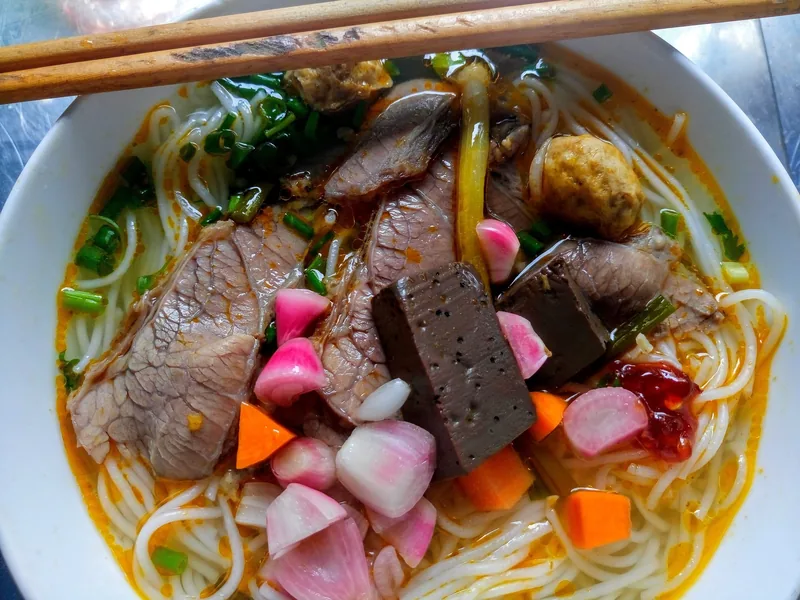
Cities · Centre
Hue
Bun bo Hue, steamed cakes and clam rice in Hue: when to eat, sourced prices, seasons and who should skip it.
Read more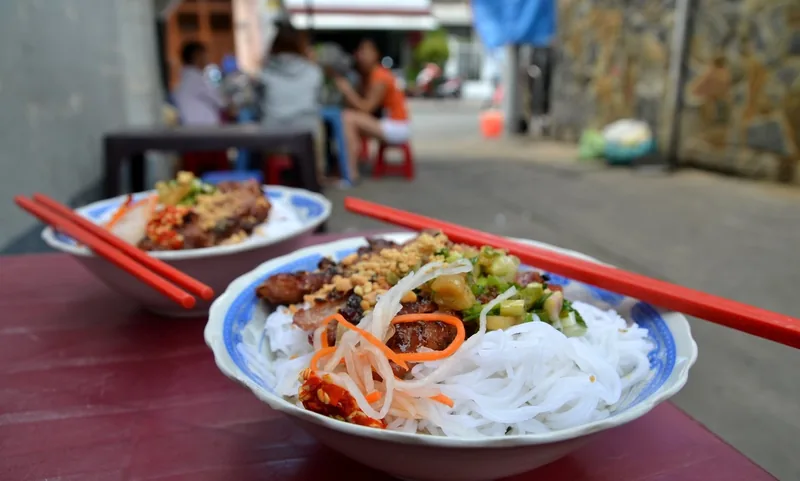
Cities · South
Ho Chi Minh City
Com tam, banh mi and southern pho in Saigon: what and when to eat, sourced prices, seasons and who should skip it.
Read more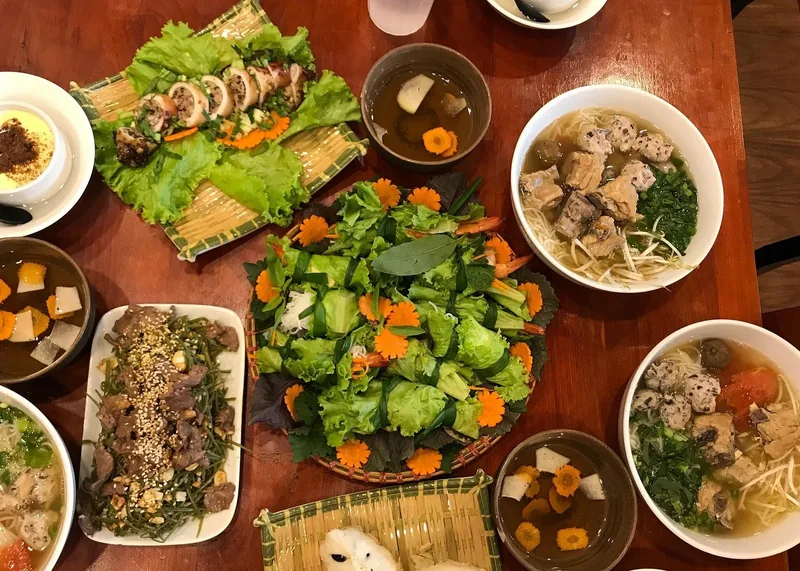
Understand · Dishes
Dish glossary
What the common street dishes are, where they come from and which allergens they usually contain.
Read more
Understand · Ordering
How to eat at a stall
Choosing a stall, sitting down, ordering without a menu, using the herbs and sauces, and paying.
Read more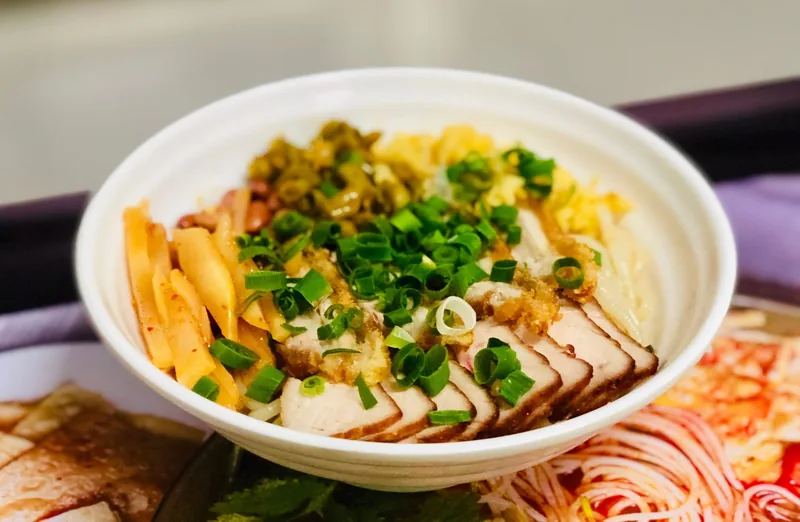
Understand · Prices
Prices by city
Price ranges for street dishes in five cities, with sources and dates, plus how to avoid being overcharged.
Read more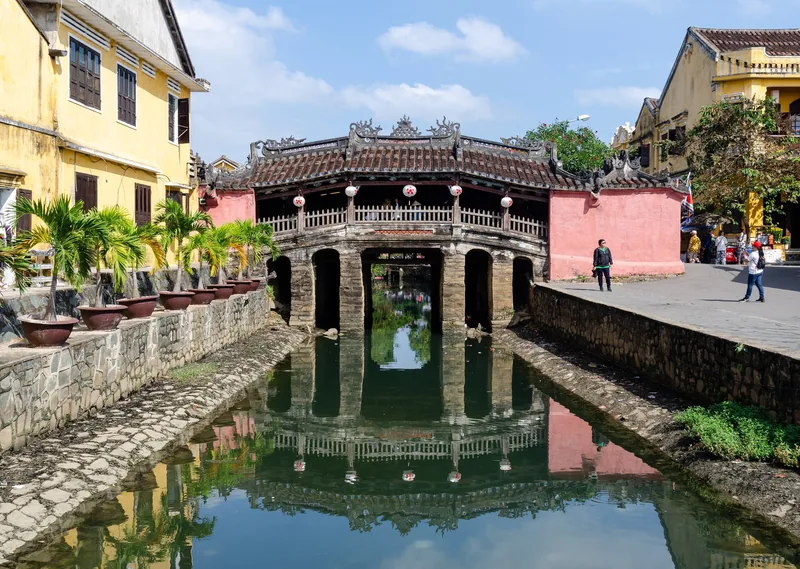
Start planning
Send a correction or a question
Tell us which page you mean, what you found at the stall or in the market, and when. A price, a date and a city help us check it.