 What to eat on the street in Vietnam, and how
Cities · Centre
Hue: small dishes, early mornings, real heat
Hue, the former imperial capital, eats differently from the rest of Vietnam: small, elaborate dishes, more chilli, and a breakfast bowl of spicy beef noodle soup named after the city. The day starts early and the rainy season is long, both of which shape a food visit.
At a glance
- Signature dish
- Bun bo Hue
- Nights
- 1 – 2 for food
- Bun bo Hue
- VND 40,000 – 60,000
- Drier months
- Mar – Aug
- Flood risk
- Sep – Nov
- Airport
- Phu Bai (HUI)
Sources: vietnamtourism.com (independent guide) — Hue food scene; Vietnam National Authority of Tourism — weather and climate · last checked .
What eating in Hue is like
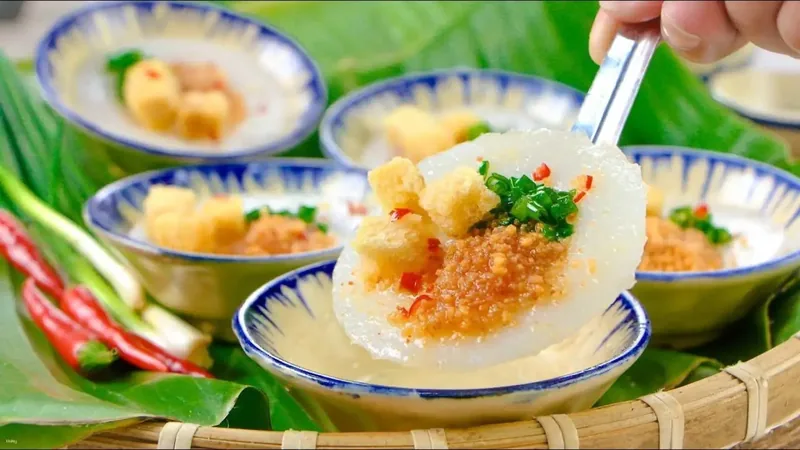
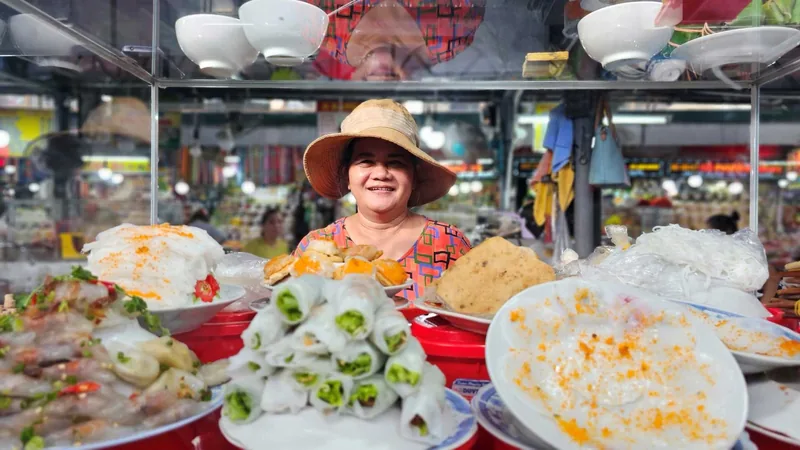
Hue was the seat of the Nguyen emperors, and its food is associated with small, elaborate, colourful dishes. On the street that shows up as cakes served in sets of tiny saucers, rice dumplings wrapped in banana leaf, and rice with baby clams. Central Vietnamese cooking is also the spiciest in the country, heavy on chilli and shrimp sauces, and Hue is where that is most obvious.
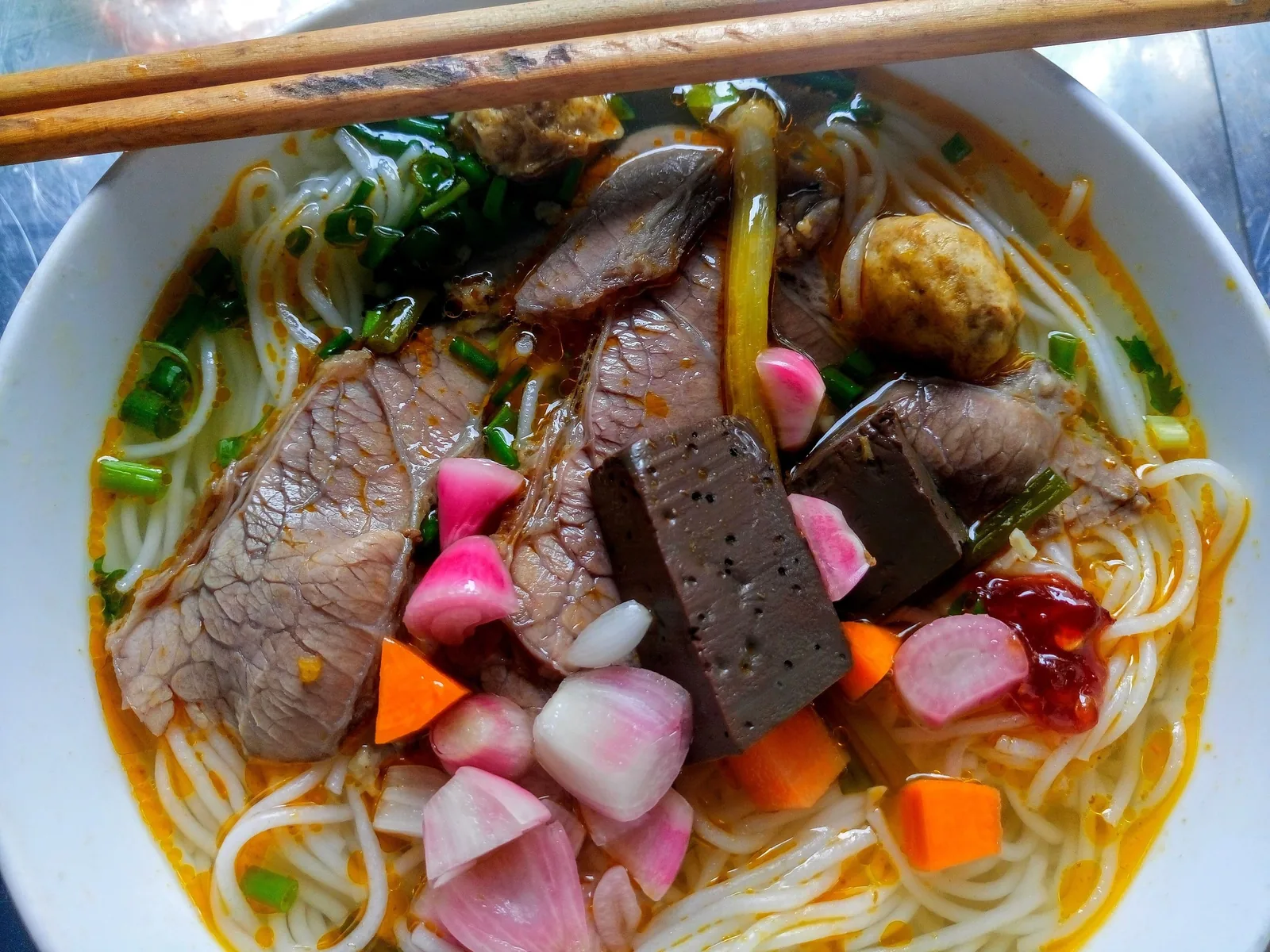
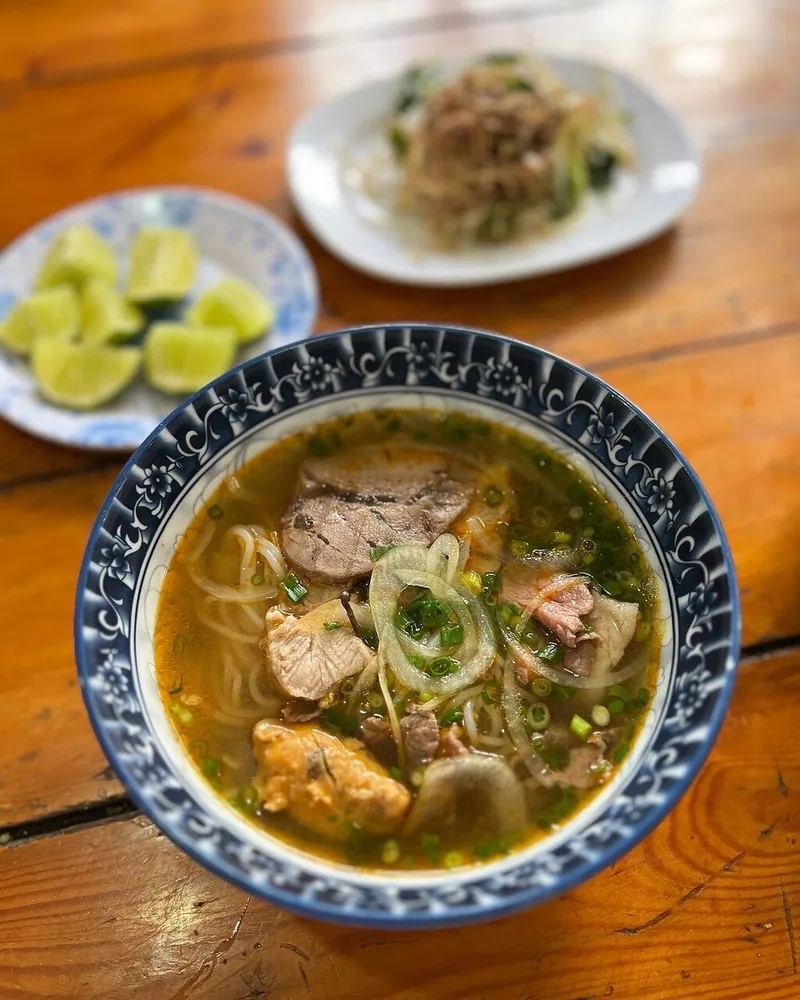
The city's most famous dish, bun bo Hue, is a beef noodle soup with a broth simmered for hours from beef bones and flavoured with lemongrass, shrimp paste and chilli. Bowls carry beef shank, pork knuckle, beef balls or Hue-style pork patties, depending on the stall. In Hue it is above all a breakfast dish.
Hue is smaller and quieter than Hanoi or Ho Chi Minh City, and fewer visitors stay more than a night or two. That means fewer stalls with English menus and more need to point and ask, but also prices that are mostly local. Since 2025 Hue has been a centrally governed city, replacing the former Thua Thien Hue province.
Sources: Wikipedia — Vietnamese cuisine; MICHELIN Guide Vietnam — article on bun bo Hue; Wikipedia — Provinces of Vietnam (2025 reorganisation) · last checked .
What to eat, and when
| Time | What is on sale | Notes |
|---|---|---|
| About 6 to 9 am | Bun bo Hue | Good vendors often sell out by about 10 am |
| Morning | Banh beo, banh nam, banh bot loc | Sold in sets; often finished by late morning |
| About 11 am to 1 pm | Com hen, banh beo and other lighter dishes | Lunch dishes |
| About 6 to 9 pm | Banh khoai and grilled dishes | Evening food takes over after sunset |
| Market hours | Many dishes at Dong Ba | Food stalls busiest about 7 to 10 am |
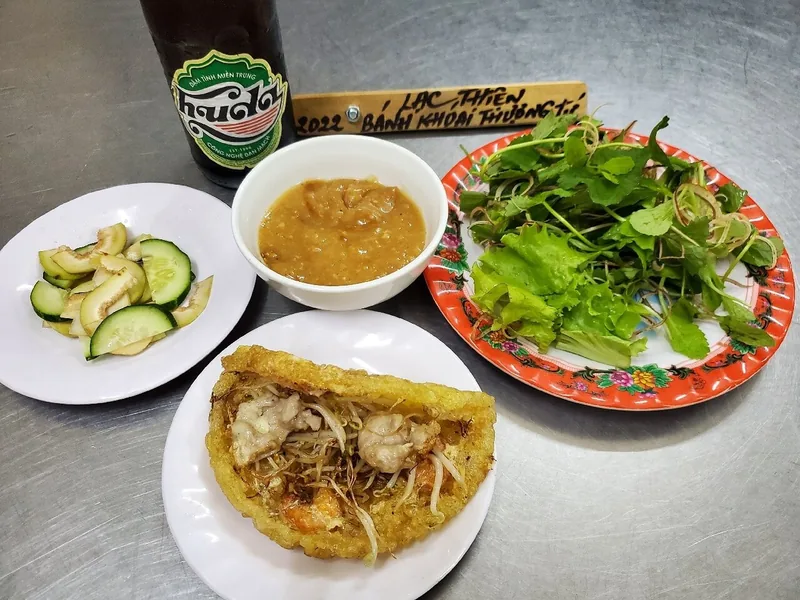
Banh beo comes as six to ten small saucers per serving, topped with mung bean, dried shrimp floss and fried shallot; it is ordered alongside banh nam (a flat rice cake with shrimp and pork in banana leaf) and banh bot loc (chewy tapioca dumplings). Banh khoai is Hue's small, crisp pancake, served with green banana, star fruit and a thick sauce. All of these are explained in the dish glossary.
Sources: vietnamtourism.com (independent guide) — Hue food scene; vietnamtourism.com (independent guide) — banh beo and how to order it; Hanoi Times — banh xeo, the pancake named after a sound · last checked .
How many nights
One to two nights is a reasonable planning estimate for Hue's street food, on one condition: at least one of those nights must be followed by an early morning. Bun bo Hue and the steamed cakes are morning foods, and visitors who arrive by afternoon train and leave the next morning after a late breakfast miss both.
Two nights give you two breakfasts, a lunch of com hen, an evening of banh khoai, and time for Dong Ba market in between. Visitors who also want the citadel and the royal tombs, which are outside this guide's scope, usually need the second night anyway.
When to go
According to the national tourism authority, Hue is warm to hot and mostly sunny from March to August, with highs around 35°C in July, and cool, rainy and cloudy from September to February, with lows near 15°C early in the year. It warns of occasional flooding from September to November. For street food, the dry months are easier; the wet months are cooler, which suits hot soup, but flooding can close low-lying stalls and markets at short notice.
3 = dry and pleasant, 2 = workable or hot, 1 = wettest or flood-prone. Our summary of the official notes.
Sources: Vietnam National Authority of Tourism — weather and climate · last checked .
Getting there
Hue's Phu Bai International Airport (HUI) has domestic flights from Hanoi and Ho Chi Minh City. The north–south railway stops in Hue, and Hue to Da Nang is a short journey by road or rail; many visitors combine Hue with Hoi An this way. Journey times depend on the train or bus and on the road you take, so check timetables before you rely on a connection. In the rainy season, allow for delays.
In the city, the main food areas around Dong Ba market and the riverbanks are walkable or a short ride-hail away. Use app-based or pre-arranged transport, as the UK Foreign Office advises, and book the whole journey in the app.
Sources: UK Foreign Office — Vietnam travel advice, safety and security · last checked .
What it costs
| Item | Typical price (VND) | Source |
|---|---|---|
| Bun bo Hue | 40,000 – 60,000 | vietnamtourism.com, August 2026 |
| Banh khoai | 25,000 – 40,000 | vietnamtourism.com, August 2026 |
| Banh beo, one serving | 15,000 – 35,000 | vietnamtourism.com, October 2026 |
| Com hen | 25,000 – 40,000 | vietnamtourism.com, August 2026 |
| Dishes at Dong Ba market | 20,000 – 40,000 | vietnamtourism.com, August 2026 |
These figures come from an independent guide, not an official body; we found no recent government or press source for Hue street prices. Treat them as ranges and check before you go. Prices in Dong Ba market run slightly above typical street stalls elsewhere in the city.
Sources: vietnamtourism.com (independent guide) — Hue food scene; vietnamtourism.com (independent guide) — banh beo and how to order it · last checked .
Dong Ba market
Dong Ba stands on the north bank of the Perfume River near the south-east corner of the citadel. It is Hue's largest market, with a total area of about 47,600 square metres. Under Emperor Gia Long it stood outside the citadel's eastern gate; it moved to its present site in 1899, was rebuilt in 1967 and renovated in 1987. It opens around 6 am, is busiest early, and winds down by early evening. The food section is the most efficient place to try several Hue dishes in one sitting.
More on how market food halls work is on the markets page.
Sources: Wikipedia — Dong Ba Market; vietnamtourism.com (independent guide) — Hue food scene · last checked .
Pictures


Who should skip Hue for food, or when not to go
- If you will not be up early. Hue's signature dishes are mostly sold in the morning.
- If you have a shellfish allergy and want the local specialities. Bun bo Hue uses shrimp paste, banh beo carries dried shrimp, and com hen is made with clams.
- If you do not eat chilli. Central cooking is the spiciest in the country, though you can ask for less.
- From September to November, if your plans cannot absorb flooding. Low-lying stalls and roads can close.
- If you are short of time and have to choose between Hue and Hoi An for food. Hoi An has more English-friendly stalls; Hue has more dishes found nowhere else.
Common questions
Questions readers ask
What time should I eat bun bo Hue in Hue?
In the morning, roughly 6 to 9 am. Good vendors often sell out by about 10 am. Outside Hue it is sold all day.
Is Hue food very spicy?
Central Vietnamese cooking is the spiciest in the country, and Hue is known for it. Chilli is often added at the table, so you can ask for less.
How much does a day of street food in Hue cost?
With bun bo Hue at VND 40,000 to 60,000 and cakes or clam rice at VND 15,000 to 40,000, three meals and snacks usually come to well under VND 300,000. Check current prices locally.
Is it worth going in the rainy season?
Hot soup in cool weather is pleasant, but Hue can flood from September to November. Keep plans flexible.
Related
Read next

Cities
Cities
How street food differs between Hanoi, Hue, Hoi An with Da Nang, and Ho Chi Minh City.
Read more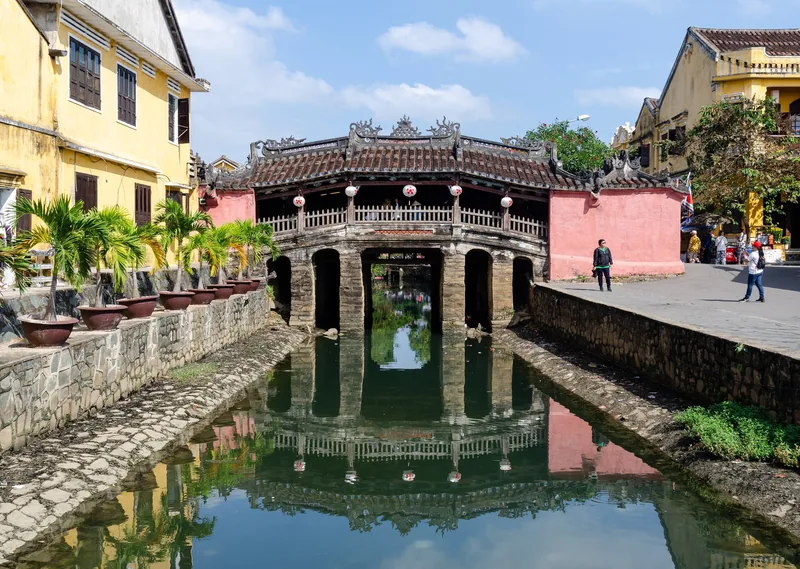
Cities · Centre
Hoi An and Da Nang
Cao lau, mi Quang and banh xeo in Hoi An and Da Nang: when to eat, sourced prices, seasons and who should skip it.
Read more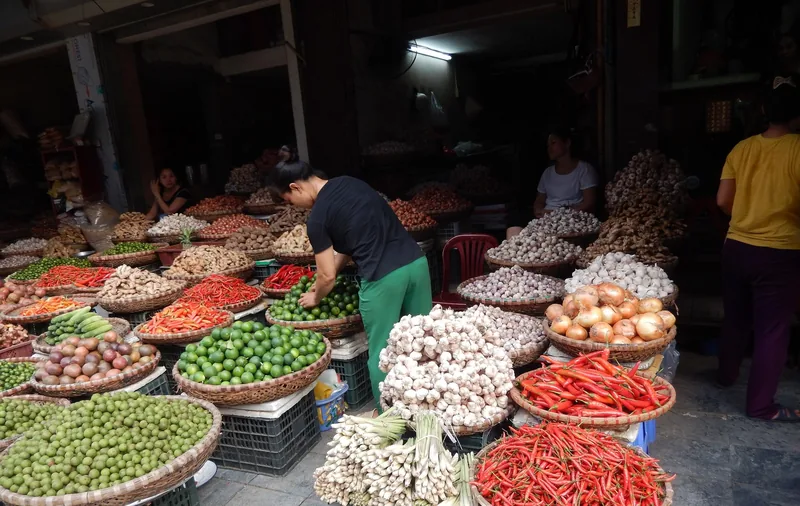
Cities · North
Hanoi
What and when to eat in Hanoi, sourced prices, seasons, getting there, and who should skip it.
Read more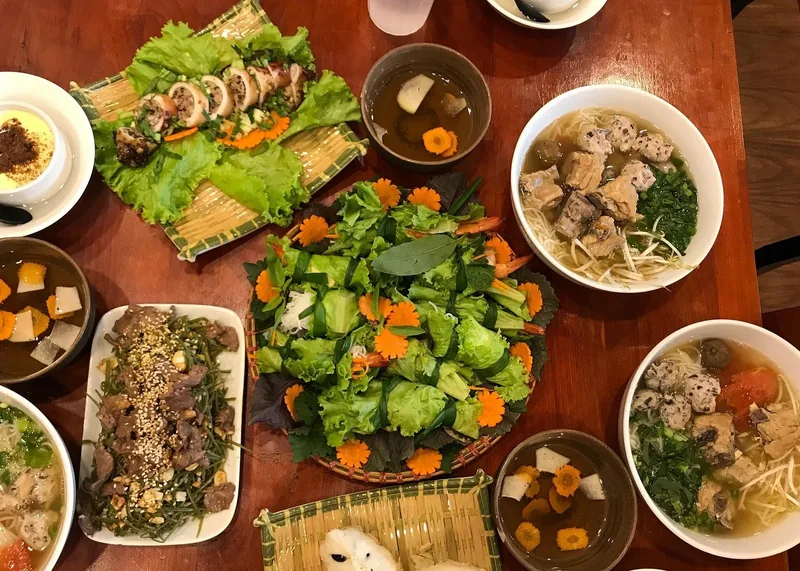
Understand · Dishes
Dish glossary
What the common street dishes are, where they come from and which allergens they usually contain.
Read more
Understand · Markets
Markets and night markets
How market food halls and night markets work, when to go, and the main markets in Hanoi, Hue and Saigon.
Read more
Understand · Prices
Prices by city
Price ranges for street dishes in five cities, with sources and dates, plus how to avoid being overcharged.
Read more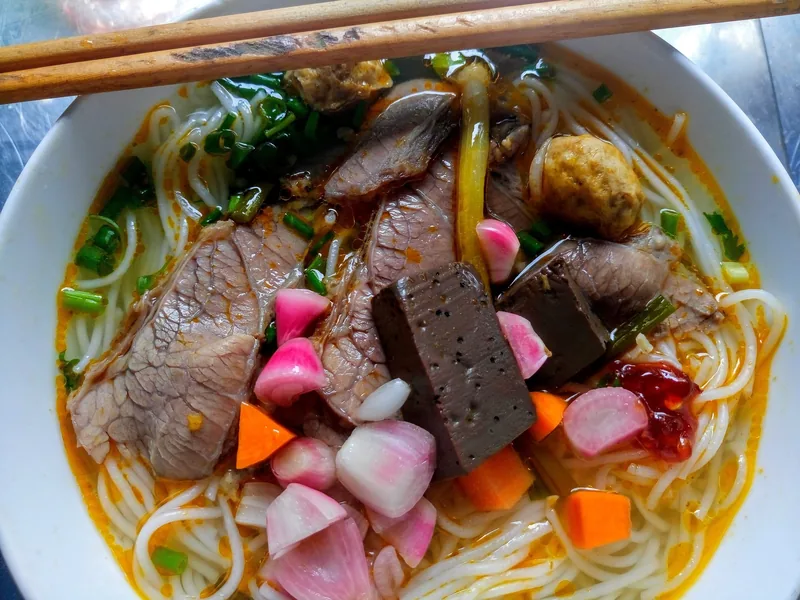
Start planning
Send a correction or a question
Tell us which page you mean, what you found at the stall or in the market, and when. A price, a date and a city help us check it.