 What to eat on the street in Vietnam, and how
Cities · South
Ho Chi Minh City: broken rice, banh mi and long hours
Saigon has the widest street food range in the country and the longest hours, from broken-rice plates at breakfast to pancakes and snails at midnight. Southern cooking is sweeter and more generous with herbs. What to eat, what it costs, how the rains work, and when the city is not worth it for food.
At a glance
- Signature dishes
- Com tam, banh mi
- Nights
- 2 – 3 for food
- Street-cart banh mi
- about VND 20,000
- Drier months
- Dec – Apr
- Rainy season
- May – Nov, afternoon storms
- Airport
- Tan Son Nhat (SGN)
Sources: Vietcetera — what separates a cheap and a dear banh mi in Saigon (July 2025); Vietnam National Authority of Tourism — weather and climate · last checked .
What eating in Ho Chi Minh City is like
Southern Vietnamese cooking is sweeter than the north's, uses more sugar and coconut milk, and piles on fresh herbs. In Ho Chi Minh City that shows in the pho, which became sweeter and cloudier after 1954 and arrives with bean sprouts, Thai basil, culantro, lime and hoisin; in the banh xeo, which is large, thin and wrapped in lettuce; and in dipping sauces that lean sweet.
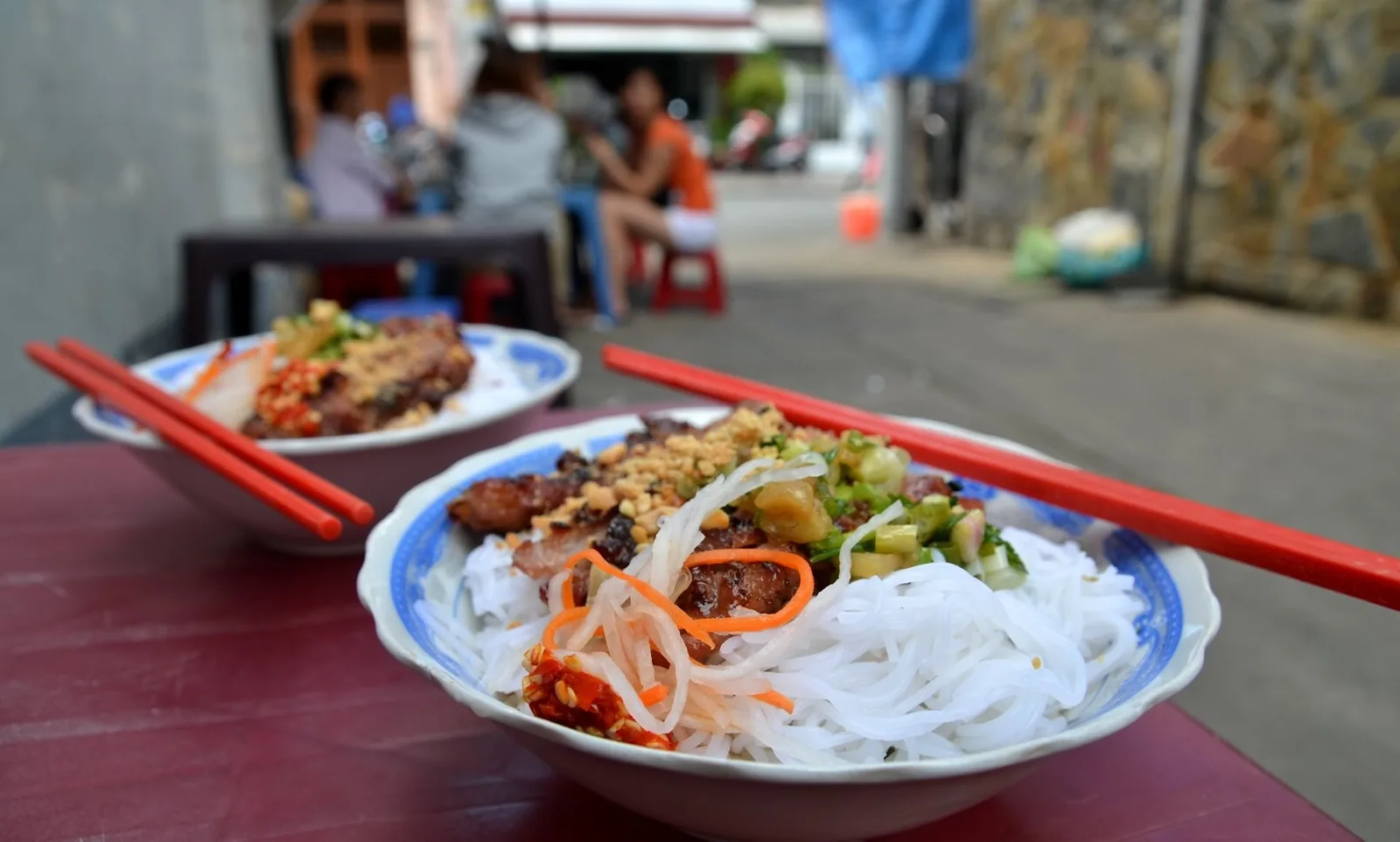
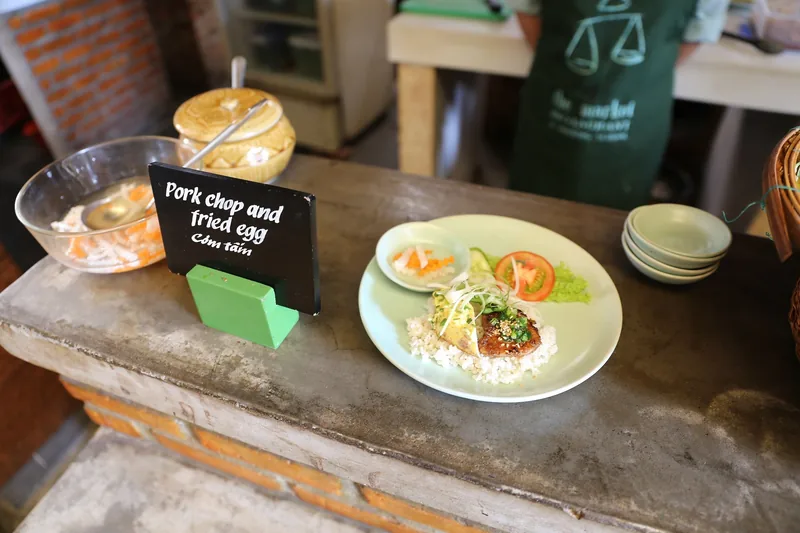
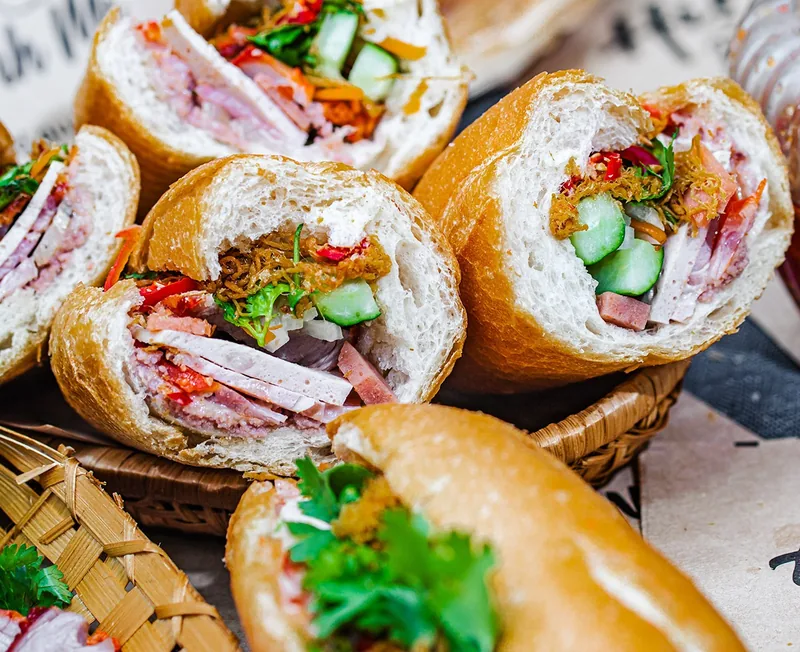
The city's own plate is com tam, broken rice. Once a cheap meal for farmers, workers and students, it is now known as com tam Sai Gon: broken rice with a grilled pork chop, shredded pork skin, a steamed egg-and-pork loaf, pickles and fish sauce. Banh mi is sold at every hour, from street carts to sit-down shops, and some accounts trace the modern sandwich to Saigon street stalls in the late 1950s.
The city is large, and since 2025 larger still, after Binh Duong and Ba Ria-Vung Tau were merged into it. Its former district names, such as District 1 for the centre, are still used by most people and most guides, though the official units are now wards.
Sources: Wikipedia — Vietnamese cuisine; Wikipedia — Pho; vietnamtourism.com (independent guide) — how to eat banh xeo; Vietnam News Agency — com tam, a signature dish of Sai Gon; MICHELIN Guide Vietnam — what is com tam; Google Doodle archive — celebrating banh mi; Wikipedia — Provinces of Vietnam (2025 reorganisation) · last checked .
What to eat, and when
| Time | What is on sale | Notes |
|---|---|---|
| Morning | Com tam, pho, banh mi | Broken-rice stalls are busy from breakfast |
| Lunch | Com tam, rice plates, noodle soups | Office crowds at noon |
| Afternoon | Banh mi, sweet soups, snacks | Rain breaks in the wet season |
| Evening to late | Banh xeo, grilled food, seafood | Ben Thanh night stalls until about 10 pm |
The dish glossary covers com tam, banh mi and southern pho in more detail. For the lettuce-wrap technique for southern banh xeo, see the how-to page.
Sources: Wikipedia — Ben Thanh Market; vietnamtourism.com (independent guide) — how to eat banh xeo · last checked .
How many nights
Two to three nights is a reasonable planning estimate. The range of food is the widest in the country, the city is spread out, and the afternoon rains in the wet season can take a few hours out of a day. With two nights you can eat com tam at breakfast twice, banh mi in between, and spend two evenings on pancakes and grilled food.
If Ho Chi Minh City is your first stop, use the first evening for something simple near your hotel. Traffic is heavy and crossing roads to reach a stall takes practice.
When to go
The national tourism authority describes the south as clear, hot and sunny from December to April, and hot and humid from May to November with afternoon downpours that last a few hours, at around 30°C all year. Street food carries on through the wet season: stalls pull their stools under awnings during a storm and reopen afterwards.
3 = dry and pleasant, 2 = workable with afternoon rain. Our summary of the official notes.
Around Tet, the Lunar New Year, the city empties as people go home, and many stalls close for several days. Pho Day, 12 December, is marked with events; in December 2025 a festival in the centre sold pho at a single price of VND 40,000, which a journalist quoted by Tuoi Tre described as below the market rate.
Sources: Vietnam National Authority of Tourism — weather and climate; Tuoi Tre — Pho Day festival in Ho Chi Minh City (December 2025) · last checked .
Getting there and around
Tan Son Nhat International Airport (SGN) has international and domestic flights, including frequent flights to Hanoi, Da Nang and Hue, and the north–south railway ends in the city. Check current timetables before you plan around a particular connection.
Inside the city, ride-hailing apps are the practical way to move between neighbourhoods. The UK Foreign Office recommends official apps such as Grab or XanhSM, warns about people posing as app drivers, and reports that bag-snatching by thieves on motorcycles is common: hold bags on the side away from the traffic, including while you sit at a pavement stall.
Sources: UK Foreign Office — Vietnam travel advice, safety and security · last checked .
What it costs
| Item | Typical price (VND) | Source |
|---|---|---|
| Banh mi from a street cart | about 20,000 | Vietcetera, July 2025 |
| Banh mi from a standard shop | about 45,000 | Vietcetera, July 2025 |
| Banh mi from a tourist-area shop in the old District 1 | about 73,000 | Vietcetera, July 2025 |
| Banh xeo, per pancake, southern style | 30,000 – 75,000 | vietnamtourism.com, October 2026 |
| Bun mam at one market stall after a rise | 65,000 | Tuoi Tre, March 2026 |
| Typical rise at eateries in early 2026 | 3,000 – 20,000 a dish | Tuoi Tre, March 2026 |
We found no recent sourced figure for a plate of com tam or a bowl of pho on the street; ask before you order and compare with the figures above. Prices in the old centre are higher than in residential districts. See the prices page for the other cities and how overcharging works.
Sources: Vietcetera — what separates a cheap and a dear banh mi in Saigon (July 2025); vietnamtourism.com (independent guide) — how to eat banh xeo; Tuoi Tre News — Ho Chi Minh City eateries edge up prices (March 2026) · last checked .
Ben Thanh market and the old centre
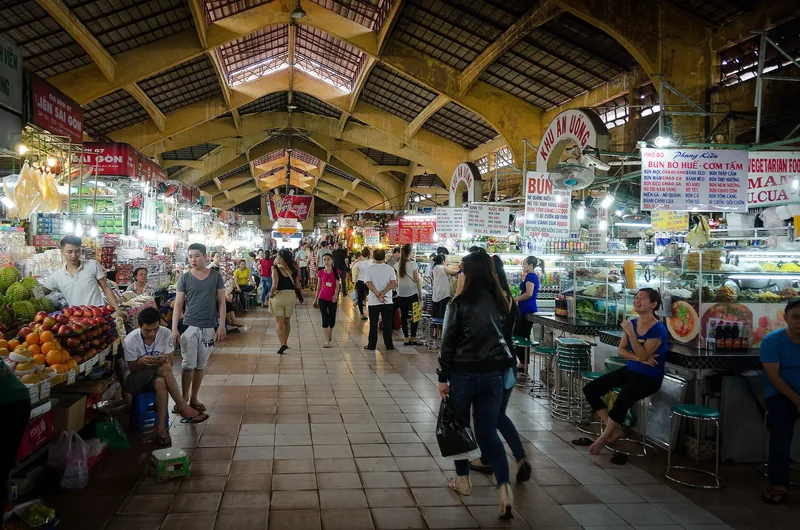
Ben Thanh market, in Ben Thanh ward in what was District 1, is in a building completed in 1914 on a site that has been a market for centuries. Food vendors near the northern gate sell pho, broken rice, bun bo Hue, grilled pork with noodles, banh beo and desserts. The market opens around 6 am and closes at 6 pm. After 6 pm, food stalls set up along Phan Boi Chau and Phan Chu Trinh streets beside it and stay until about 10 pm.
Market and night-market prices here are aimed at visitors more than in residential areas. The markets page explains how to eat in a market food hall.
Sources: Wikipedia — Ben Thanh Market · last checked .
Pictures

Who should skip Ho Chi Minh City for food, or when not to go
- If heavy traffic stresses you. Reaching stalls means crossing busy roads, and pavements are shared with motorbikes.
- If you dislike sweet flavours. Southern cooking uses more sugar, in sauces, marinades and drinks.
- In Tet week, if street food is the main reason for the visit. The city empties and many stalls close.
- If you want a compact, walkable food town. The city is very large; Hoi An or Hue are easier on foot.
- If you will spend only an evening in the centre. The old District 1 area is the most visitor-priced part of the city.
Common questions
Questions readers ask
What is com tam?
Broken rice, usually with a grilled pork chop, shredded pork skin, a steamed egg-and-pork loaf, pickles and fish sauce. It is the signature street plate of Ho Chi Minh City and is eaten from breakfast onwards.
How much should a banh mi cost in Saigon?
In July 2025 a street-cart banh mi cost about VND 20,000, a standard shop about VND 45,000, and a tourist-area shop in the old District 1 about VND 73,000. Prices rose in 2026, so check locally.
Does the rainy season stop street food?
No. From May to November there are afternoon downpours of a few hours; stalls pull in their stools and reopen afterwards.
Is southern pho different from Hanoi pho?
Yes. The southern broth is sweeter and cloudier and comes with bean sprouts, Thai basil, culantro, lime and hoisin. The Hanoi bowl is clearer, with fewer garnishes.
Related
Read next

Cities
Cities
How street food differs between Hanoi, Hue, Hoi An with Da Nang, and Ho Chi Minh City.
Read more
Cities · North
Hanoi
What and when to eat in Hanoi, sourced prices, seasons, getting there, and who should skip it.
Read more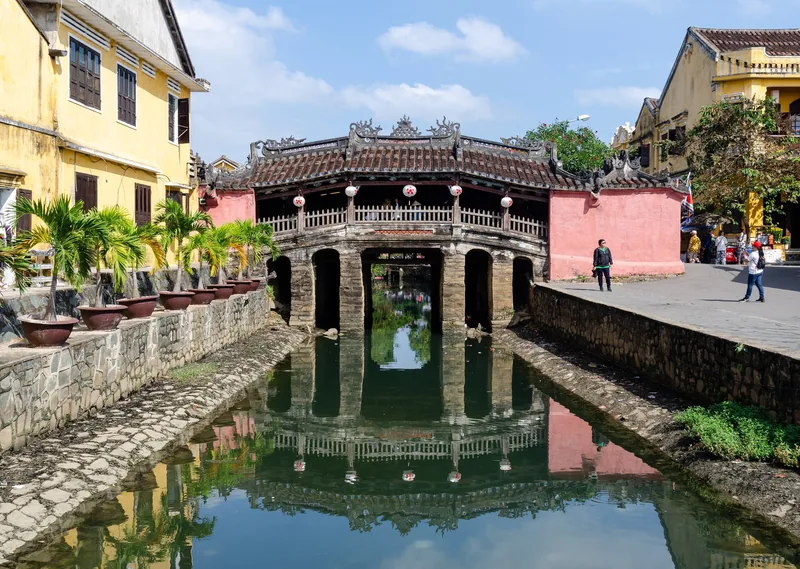
Cities · Centre
Hoi An and Da Nang
Cao lau, mi Quang and banh xeo in Hoi An and Da Nang: when to eat, sourced prices, seasons and who should skip it.
Read more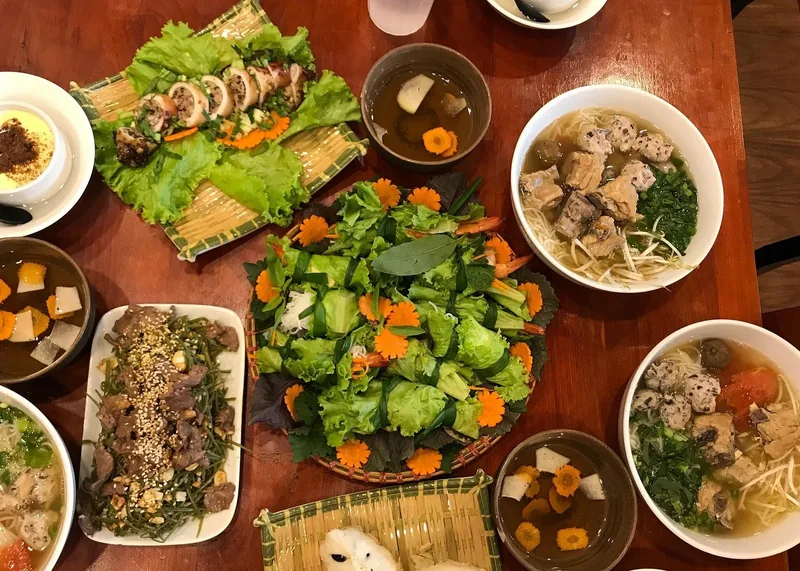
Understand · Dishes
Dish glossary
What the common street dishes are, where they come from and which allergens they usually contain.
Read more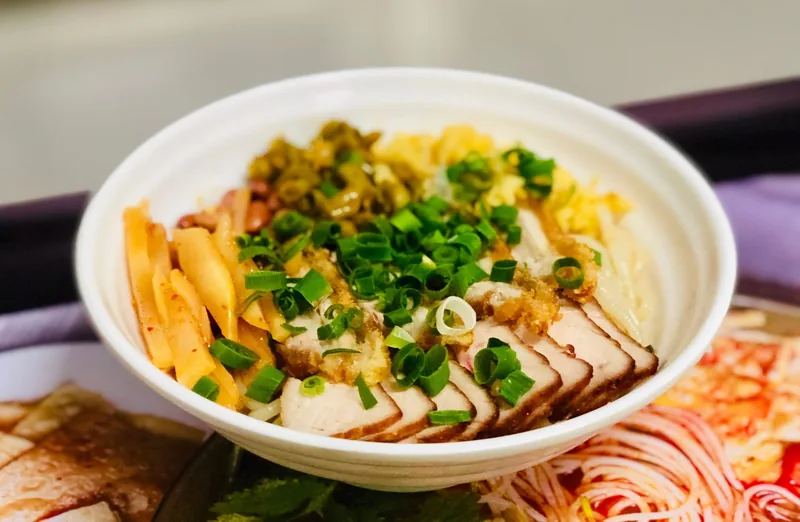
Understand · Prices
Prices by city
Price ranges for street dishes in five cities, with sources and dates, plus how to avoid being overcharged.
Read more
Understand · Diets
Vegetarian and dietary needs
An chay, vegan, halal and gluten-free street eating: hidden ingredients, the words to use and where to look.
Read more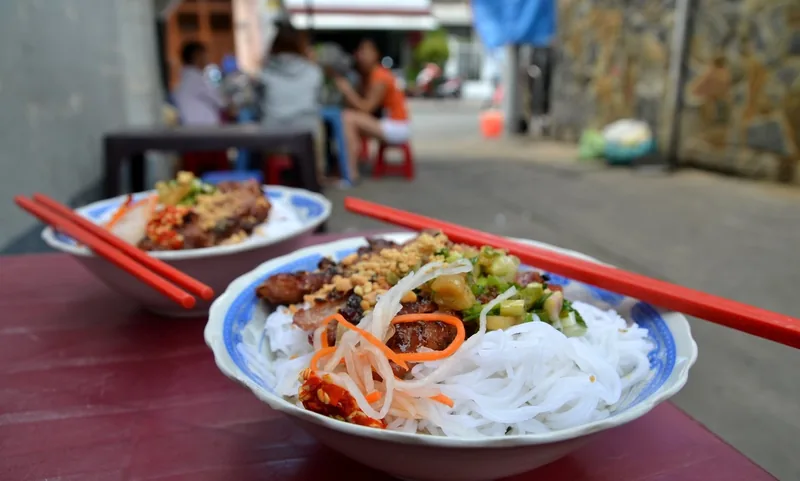
Start planning
Send a correction or a question
Tell us which page you mean, what you found at the stall or in the market, and when. A price, a date and a city help us check it.